Beyond the Cubicle: Modern HR Trends Shaping the Future of Work
In a world where change is constant, the traditional cubicle is becoming a relic of the past. The workplace is no longer confined to physical spaces and rigid routines—it is evolving into a dynamic ecosystem driven by innovation, purpose, and people-centric strategies. The future of work is not just about where work happens; it’s about how work gets done, who does it, and why it matters.
For HR leaders and organizations striving to stay ahead, understanding and embracing these shifts is no longer optional—it’s essential. Let’s explore the modern HR trends reshaping the workplace, the role of HR technology, and how companies can navigate this workforce transformation effectively.
Top 7 HR Trends Revamping Future of Work
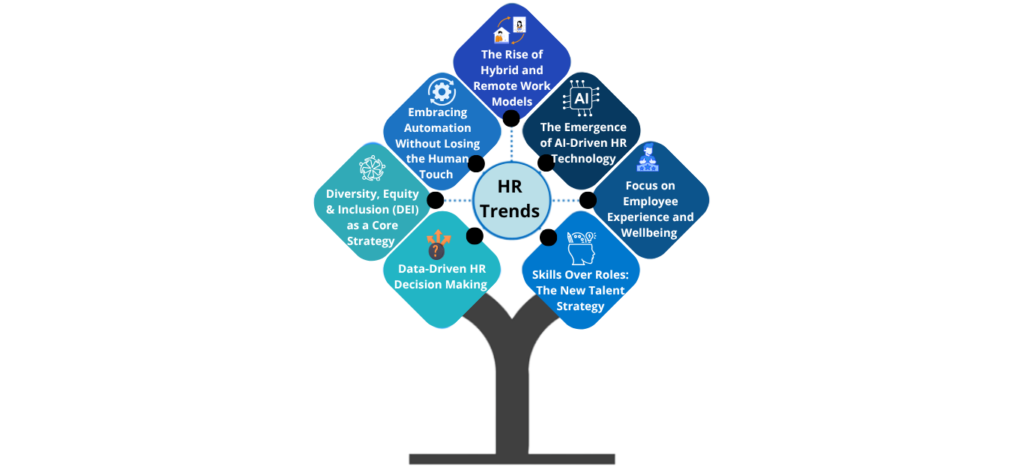
1. The Rise of Hybrid and Remote Work Models
Flexible work arrangements have gone from being a temporary response to a global crisis to becoming a defining characteristic of the modern workplace. Employees now expect flexibility in where and how they work.
HR’s role: HR must redefine workplace policies, foster virtual collaboration, and ensure remote teams feel engaged and valued. Technologies like digital attendance, cloud-based performance tools, and virtual onboarding systems are becoming indispensable.
What it means for the workforce transformation: The workplace is now a blend of physical and digital environments. Successful organizations are investing in seamless integration of tools and fostering a culture that thrives beyond office walls.
2. The Emergence of AI-Driven HR Technology
The integration of AI in HR isn’t a distant possibility; it’s here. From resume screening and chatbots to predictive analytics and AI-driven learning paths, intelligent systems are revolutionizing how HR teams operate.
How HR technology is driving change:
- Automates repetitive tasks, freeing HR to focus on strategy
- Offers data-driven insights for better decision-making
- Enhances candidate and employee experiences through personalization
Impact on workforce transformation: AI empowers HR professionals to become strategic advisors. The use of intelligent tech tools ensures faster hiring, improved talent retention, and real-time workforce insights.
3. Focus on Employee Experience and Wellbeing
The future of workplaces, people are at the core of organizational success. Employees expect meaningful engagement, wellness support, and growth opportunities—not just salaries and job titles.
HR trends shaping this shift:
- Personalized benefits and wellness programs
- Continuous feedback and employee recognition tools
- Holistic HR platforms that integrate work-life balance initiatives
What it means for the workforce transformation: Happy employees are productive employees. Prioritizing experience and wellbeing aren’t just the right thing to do—it’s a business imperative.
4. Skills Over Roles: The New Talent Strategy
Job descriptions are evolving. Skills are taking precedence over traditional roles, and learning agility is the new competitive edge. The gig economy, contract work, and cross-functional projects are fueling this transition.
How HR is adapting:
- Implementing Learning Management Systems (LMS) for continuous upskilling
- Offering AI-powered skill assessments and personalized development plans
- Encouraging internal mobility and talent redeployment
Workforce transformation insight: Companies must cultivate a culture of continuous learning to stay relevant. Investing in upskilling and reskilling is not optional—it’s survival.
5. Data-Driven HR Decision Making
Modern HR leaders no longer rely on gut feelings. Advanced analytics and HR technology now guide strategic decisions—from hiring to employee engagement to succession planning.
Key trends include:
- Workforce dashboards for real-time insights
- Predictive analytics for attrition and performance trends
- KPIs tied to DEI, engagement, and productivity
Future-forward HR: Data is the new HR currency. Those who can read, interpret, and act on workforce data will shape a more agile, responsive workplace.
6. Diversity, Equity & Inclusion (DEI) as a Core Strategy
DEI is no longer a checkbox—it’s a cultural foundation. Organizations are being held accountable for ensuring fair representation, equal opportunity, and inclusive practices.
HR’s evolving role:
- Using analytics to track DEI metrics
- Embedding DEI into recruitment, learning, and leadership
- Creating safe spaces for dialogue and feedback
What this means for the workforce transformation: Workplaces of the future will be equitable by design. DEI will not be a campaign; it will be part of every decision and process.
7. Embracing Automation Without Losing the Human Touch
Automation is reshaping HR processes but the challenge lies in maintaining empathy and personalization.
Finding balance:
- Automate tasks, not conversations
- Use technology to enable deeper human connections
- Let AI handle workflows while HR leads culture
Future-ready organizations: The best workplaces will blend tech efficiency with human warmth, delivering both speed and soul.
Final Thoughts: Leading the Workforce Transformation with Vision
The future of work is being written now, and HR is holding the pen. By embracing change, leveraging HR technology, and putting people first, organizations can shape a future where work is not just done—but done with purpose, impact, and innovation.
SkizzleHR helps organizations future-proof their workforce with intelligent, customizable tools designed for the modern workplace. From AI-driven HR automation to mobile-first employee engagement and advanced analytics, SkizzleHR enables HR teams to lead the charge in workforce transformation.
Are you ready to move beyond the cubicle?
Explore how SkizzleHR can empower your journey into the future of work.
You might also like

Start Growing with SkizzleHR
Our team is ready to guide you through an interactive demonstration, tailored to your business needs.
Request a demo