Step-by-Step Payroll Setup for New Businesses with SkizzleHR
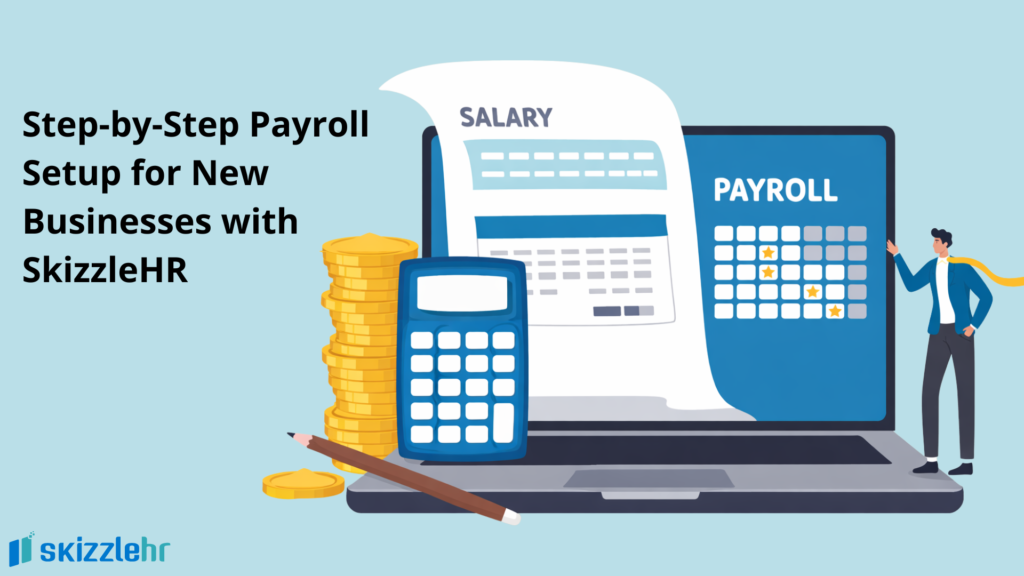
Setting up payroll for a new business is one of the most important operational decisions you’ll make. A well-structured payroll setup process ensures employees are paid accurately, compliance is maintained, and HR operations run smoothly from day one.
SkizzleHR’s Detailed Payroll Process Guide
For startups and growing businesses, payroll is not just about processing salaries. It involves configuring pay cycles, attendance policies, tax declarations, reimbursements, and statutory deductions; all while staying compliant with financial year regulations.
This is where structured payroll implementation steps make all the difference. With SkizzleHR, businesses can launch payroll confidently using a guided, systematic approach that reduces errors and saves time.
Let’s walk through the essential stages of payroll setup — without the overwhelm.
Why Payroll Setup Matters for New Businesses?
When payroll isn’t configured correctly at the beginning, it can lead to:
- Salary miscalculations
- Incorrect tax deductions
- Compliance penalties
- Employee dissatisfaction
- Year-end reconciliation headaches
A clear payroll implementation steps ensures your company establishes accurate pay structures, defines attendance rules, and aligns payroll with statutory requirements from the start.
Step 1: Define Your Company Payroll Structure
The first step in payroll implementation is identifying which company or business units the configuration applies to. If you operate:
- A single company — you can create a customized payroll structure.
- Multiple entities — you can apply common payroll policies across all or define separate configurations.
This flexibility is crucial for growing organizations managing multiple branches or legal entities.
Step 2: Determine Your Payroll Starting Point
One of the most critical payroll implementation steps is deciding whether:
- You are running payroll for the first time, or
- You are switching systems mid-financial year.
If you’re migrating mid-year, previous payroll data must be incorporated to ensure:
- Accurate tax calculations
- Proper TDS reconciliation
- Smooth compliance reporting
For newly established companies running payroll for the first time, the setup is simpler; no historical validation is required.
This distinction ensures payroll accuracy from the very first cycle.
Step 3: Configure Pay Frequency and Pay Cycle
Next comes defining how and when employees get paid. You’ll need to determine:
- Pay frequency (monthly, bi-weekly, etc.)
- Pay period (calendar month or custom cycle)
- Salary processing date
For example, some organizations follow the standard 1st–30th cycle, while others operate on custom cycles like 26th–25th. Setting this correctly ensures accurate attendance mapping and salary calculations.
A well-defined pay cycle prevents confusion and maintains consistency across payroll processing.
Step 4: Align Attendance with Payroll
Attendance integration is one of the most important parts of the payroll setup process. Businesses must decide:
- Whether attendance data will sync automatically from a time-tracking system
- Or whether attendance details (LOP, adjustments) will be uploaded manually
This decision directly impacts salary accuracy. Additionally, organizations define how salaries are calculated:
- Based on calendar days
- Based on fixed working days
- Whether week-offs are included or excluded
- Whether holidays are considered paid
These policies significantly influence salary computation and must align with your HR policy.
Step 5: Enable Payslip Security
In today’s digital environment, data privacy is non-negotiable. Modern payroll systems allow you to enable password-protected payslips, ensuring:
- Secure employee data
- Reduced risk of confidential information leaks
- Professional payroll communication
Security features enhance trust and demonstrate compliance readiness.
Step 6: Configure Investment & Tax Declaration Rules
Another vital payroll implementation step involves setting rules for:
- Investment declarations
- Cut-off dates for tax-saving submissions
- Approval workflows
- Confirmed declaration timelines
These settings ensure:
- Employees declare investments on time
- Tax calculations remain accurate
- Year-end excess tax deductions are minimized
Setting financial year cut-offs correctly prevents compliance risks and last-minute payroll adjustments.
Step 7: Manage Reimbursements & Flexible Benefits (FBP)
Modern payroll isn’t limited to fixed salaries. It includes:
- Internet allowances
- Travel reimbursements
- Flexible benefit components
A strong payroll setup process allows you to define:
- Monthly entitlement dates
- Claim submission deadlines
- Tax treatment methods
Organizations can choose whether reimbursements are taxed monthly or adjusted at year-end based on bill submissions.
This flexibility ensures your payroll system adapts to your internal compensation strategy.
Step 8: Configure Loan & Deduction Settings
If your organization provides employee loans, payroll must accommodate:
- EMI deductions
- Interest calculations
- Approval controls
Defining these rules during setup ensures automated recovery and accurate payroll adjustments without manual intervention.
Bringing It All Together
When these payroll implementation steps are structured properly, businesses benefit from:
- Accurate salary processing
- Automated compliance management
- Reduced manual errors
- Improved transparency
- Scalable payroll operations
For new businesses especially, getting payroll right from day one builds credibility and operational stability.
Why New Businesses Choose SkizzleHR for Payroll Setup ?
SkizzleHR simplifies the entire payroll setup process with a guided configuration system designed specifically for growing businesses. With SkizzleHR, you can:
- Configure payroll for single or multiple companies
- Integrate attendance automatically
- Set flexible pay cycles
- Manage tax declarations efficiently
- Handle reimbursements and FBP seamlessly
- Ensure payslip security
- Stay compliant throughout the financial year
Instead of juggling spreadsheets and disconnected tools, SkizzleHR connects all primary HR functions into one streamlined payroll engine.
And here’s the best part; if you’re planning your payroll launch or system upgrade, now is the perfect time.
SkizzleHR is offering 2 months FREE for new businesses.
If you’re setting up payroll for the first time or looking to simplify your existing structure, this is your opportunity to start with a system built for accuracy, compliance, and growth.
Make your payroll setup simple. Make it scalable. Make it future-ready with SkizzleHR.
You might also like


Start Growing with SkizzleHR
Our team is ready to guide you through an interactive demonstration, tailored to your business needs.
Request a demo