AI for Talent Acquisition in 2026: What HR Leaders Need to Know
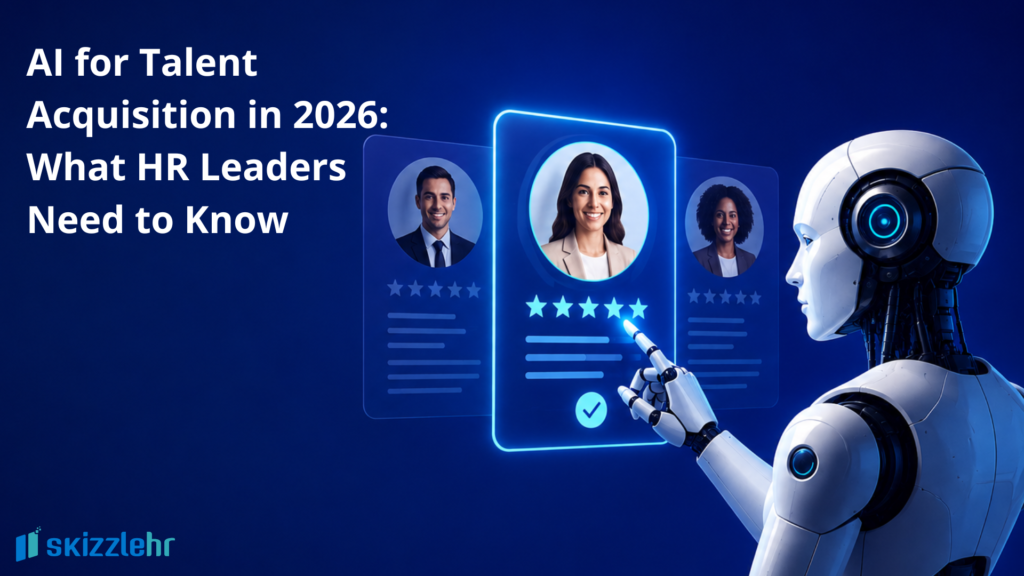
The world of recruitment is evolving faster than ever. Businesses today are no longer competing solely on products, services, or pricing; they are competing for talent. As workforce expectations shift and skill shortages continue across industries, companies are increasingly turning to AI for Talent Acquisition to gain a competitive advantage.
In 2026, artificial intelligence is no longer viewed as a futuristic HR capability. It has become an essential component of modern recruitment strategies, helping organizations streamline hiring, improve candidate experiences, and make more informed workforce decisions. Industry research indicates that AI is transforming every stage of the recruitment lifecycle, from sourcing and screening candidates to workforce planning and talent assessment.
For HR leaders, understanding how AI is evolving and how it can support business growth is critical. This article explores the latest trends in AI-powered recruitment, the growing role of predictive analytics, and how SkizzleHR is preparing to bring intelligent hiring capabilities into its HR technology ecosystem.
The Growing Importance of AI in Talent Acquisition
Traditional recruitment processes often involve significant manual effort. Recruiters spend countless hours posting jobs, reviewing resumes, coordinating interviews, responding to candidate queries, and maintaining hiring records.
As hiring volumes increase and business needs become more dynamic, these manual processes can slow down recruitment and impact hiring quality.
This is where AI for Talent Acquisition is creating a major shift.
AI enables HR teams to automate repetitive tasks while simultaneously improving decision-making. Instead of focusing on administrative work, recruiters can spend more time engaging with candidates, evaluating cultural fit, and building strong talent pipelines.
According to industry experts, AI-first recruitment models are becoming increasingly common, especially for high-volume hiring environments where efficiency and speed are critical.
How AI Is Transforming Recruitment in 2026
1.Intelligent Candidate Sourcing
One of the biggest challenges in recruitment is finding qualified candidates quickly.
Modern AI systems can analyse large talent databases, identify suitable candidates based on skills and experience, and recommend prospects who may not have been discovered through traditional search methods.
Rather than relying solely on keywords, AI tools can evaluate candidate profiles more contextually, helping recruiters uncover hidden talent and improve sourcing efficiency.
2. Smarter Resume Screening
Resume screening has historically been one of the most time-consuming recruitment tasks.
AI-powered screening tools can rapidly analyse applications, assess qualifications, and prioritise candidates based on predefined hiring criteria. This reduces the time recruiters spend reviewing applications while ensuring that promising candidates are identified early in the process.
Recent research also suggests that AI-assisted recruitment can improve candidate selection efficiency when combined with human oversight.
3. AI-Driven Candidate Engagement
Candidate experience has become a key differentiator in competitive hiring markets.
Companies are increasingly deploying AI-powered assistants and conversational interfaces to answer candidate questions, provide job information, schedule interviews, and offer status updates throughout the recruitment journey.
These capabilities help maintain candidate engagement while reducing the workload on recruitment teams. The growing adoption of conversational AI in recruiting platforms demonstrates how important candidate communication has become in modern hiring strategies.
4. Skills-Based Hiring
Another major trend shaping recruitment in 2026 is the shift from qualification-based hiring to skills-based hiring.
Organisations are placing greater emphasis on demonstrated competencies, practical abilities, and future potential rather than focusing exclusively on degrees or previous job titles.
AI systems can help evaluate candidate skills more effectively by analyzing assessments, portfolios, certifications, and work samples. This approach broadens talent pools and improves hiring outcomes by focusing on actual capabilities rather than traditional credentials.
The Rise of Predictive Analytics in Talent Acquisition
While automation receives much of the attention, one of the most valuable applications of AI lies in predictive analytics in talent acquisition.
Predictive analytics uses historical workforce data, hiring trends, and machine learning algorithms to forecast future workforce needs and recruitment outcomes.
Instead of asking:
“Who should we hire today?”
HR leaders can begin asking:
“What skills will we need six months from now?”
“Which positions are most likely to face talent shortages?”
“What factors contribute to successful long-term hires?”
This shift from reactive hiring to proactive workforce planning is transforming talent acquisition into a strategic business function.
Benefits of Predictive Analytics
1.Improved Quality of Hire
Predictive models can identify characteristics associated with successful employees, helping recruiters focus on candidates who are more likely to perform well and remain engaged.
2.Reduced Time-to-Hire
By forecasting talent needs in advance, organizations can build talent pipelines before vacancies become urgent.
3.Better Workforce Planning
Predictive insights help HR leaders align hiring strategies with business objectives and anticipated workforce demands.
4.Reduced Recruitment Costs
Accurate forecasting minimizes rushed hiring decisions, reduces dependency on external recruitment agencies, and lowers turnover-related expenses.
As organizations continue to embrace data-driven HR strategies, predictive analytics is expected to become a core component of talent acquisition programs worldwide.
The Evolving Role of Recruiters
Contrary to common concerns, AI is not replacing recruiters.
Instead, it is transforming recruiters into strategic talent advisors.
As AI handles repetitive activities such as screening, scheduling, and data analysis, recruiters can focus on higher-value responsibilities including:
- Building relationships with candidates
- Employer branding
- Workforce planning
- Hiring manager collaboration
- Diversity and inclusion initiatives
- Strategic talent consulting
Industry experts increasingly describe AI as a recruiting co-pilot rather than a replacement for human judgment. Human oversight remains essential for evaluating cultural fit, leadership potential, communication skills, and organizational alignment.
Responsible AI: A Critical Priority
As AI adoption grows, organizations must also address concerns related to bias, transparency, privacy, and accountability.
HR leaders should ensure that AI systems:
- Operate transparently
- Support fair hiring practices
- Comply with data privacy regulations
- Allow human review of critical decisions
- Maintain auditability and explainability
Responsible AI governance will play a major role in building trust among candidates, employees, and business leaders. Researchers continue to emphasize the importance of transparency and human involvement in AI-driven recruitment decisions.
How SkizzleHR Is Embracing the Future of AI-Powered HR Tech?
At SkizzleHR, we recognise that the future of HR technology extends far beyond automation. Businesses increasingly need intelligent systems that can assist HR teams, simplify employee interactions, and support better decision-making.
As part of our AI roadmap, SkizzleHR is actively exploring advanced AI-powered capabilities through its intelligent HR chatbot and AI assistant framework. The vision is to create a conversational HR experience that helps employees, managers, and HR teams access information instantly, complete routine tasks effortlessly, and receive contextual support when needed.
Future AI-driven capabilities within the SkizzleHR ecosystem may include:
- Intelligent candidate query handling
- Automated interview coordination
- AI-assisted recruitment workflows
- Smart employee self-service
- Context-aware HR support
- Workforce insights and analytics
- Talent intelligence recommendations
- Predictive hiring and workforce planning assistance
By combining AI, automation, and workforce intelligence, SkizzleHR aims to help organizations build more agile, data-driven, and employee-centric HR operations.
Conclusion
The future of recruitment is no longer about simply filling vacancies; it is about creating intelligent, proactive, and scalable hiring strategies.
The adoption of AI for Talent Acquisition is enabling organizations to recruit faster, improve hiring quality, enhance candidate experiences, and make better workforce decisions. At the same time, predictive analytics in talent acquisition is helping HR leaders move from reactive hiring to strategic workforce planning.
As AI technologies continue to mature, organisations that embrace intelligent recruitment tools while maintaining strong human oversight will be best positioned to attract, engage, and retain top talent.
The future of hiring has arrived, and HR leaders who invest in AI-driven talent acquisition today will be better prepared for the workforce challenges of tomorrow.
You might also like


Start Growing with SkizzleHR
Our team is ready to guide you through an interactive demonstration, tailored to your business needs.
Request a demo