Enterprise Payroll Software: What Large Companies Should Look For
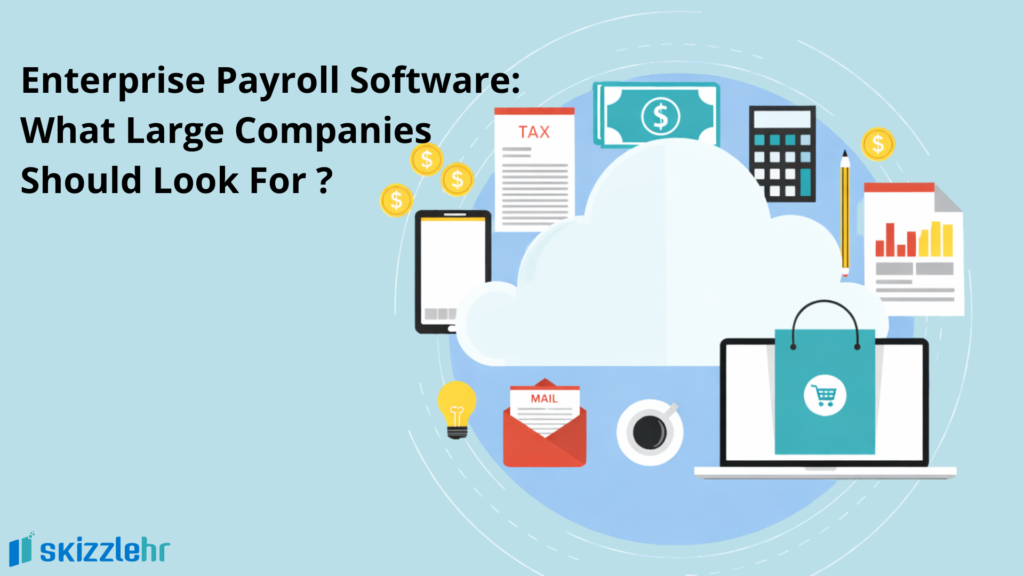
Managing payroll at a large organization is vastly different from handling it for a small business. When you’re processing salaries for hundreds or thousands of employees, the complexity grows exponentially; from statutory compliance and multi-state tax regulations to varied pay structures and real-time reporting needs. This is why investing in the right enterprise payroll software becomes a strategic imperative for large enterprises.
Selecting the right payroll software is one of the most important technology decisions an organization can make. Payroll is no longer limited to calculating employee salaries—it has become a critical business function that directly impacts compliance, employee satisfaction, financial accuracy, and operational efficiency. For growing enterprises managing large workforces across multiple locations, choosing payroll software that is scalable, secure, and integrated with HR operations is essential for long-term success.
Modern enterprises require more than standalone payroll applications. They need an intelligent solution that seamlessly connects payroll with attendance, leave management, shift scheduling, employee records, performance management, and statutory compliance. An AI-Powered HRMS Platform enables businesses to automate payroll processing, eliminate manual calculations, reduce compliance risks, and gain valuable workforce insights through real-time analytics. Investing in the right payroll software allows organizations to improve decision-making while creating a smooth and transparent payroll experience for employees.
In this guide, we’ll walk you through what large companies should look for in payroll systems, how the right solution simplifies payroll operations, and why choosing a future-ready platform can significantly enhance your HR and finance effectiveness. If you’re evaluating a Payroll System for Large Companies, this blog is your step-by-step roadmap.
What Makes Enterprise Payroll Software Different?
Unlike basic payroll tools designed for small teams, payroll software for bigger companies must support the scale, regulations, and processing requirements of large organizations. A typical payroll system for large companies needs to handle:
- High volume data processing
- Complex salary structures and pay components
- Integration with HR functions like attendance, leave, and performance
- Automated compliance with statutory regulations
- Data accuracy and audit trails
Large companies can’t afford manual interventions, errors in tax calculations, or delayed salary payouts; all of which can impact employee morale, compliance standings, and company reputation.
Essential Features Every Enterprise Payroll Software Should Offer
Enterprise payroll requirements continue to evolve as businesses expand across multiple locations, adopt hybrid work models, and manage increasingly diverse workforces. The ideal payroll solution should not only automate salary processing but also support business scalability, compliance, and strategic workforce management.
When evaluating payroll software, enterprises should look for features such as:
- End-to-end payroll automation.
- Automatic tax calculations and statutory compliance.
- Multi-location and multi-company payroll management.
- Integration with attendance, leave, and shift management.
- Employee self-service portal for payslips and tax documents.
- Real-time payroll analytics and customizable reports.
- Secure cloud-based data storage with role-based access.
- Flexible salary structures and reimbursement management.
- Mobile accessibility for HR teams and employees.
- Easy integration with accounting and ERP systems.
Choosing software with these capabilities helps enterprises improve payroll efficiency while supporting future business growth.
Top Features to Look For in Enterprise Payroll Software
When evaluating a payroll system for large companies, it’s essential to ensure it isn’t just robust, but also flexible, scalable, and future-ready. Below, we detail must-have features that differentiate an enterprise-grade payroll solution.
1. Scalable Architecture
Large organizations experience changes in headcount, locations, policies, and payroll rules frequently. Your payroll software should scale seamlessly; whether you’re processing salaries for 500 or 10,000 employees. Scalable systems support rapid growth without performance lags, data bottlenecks, or frequent system upgrades.
2. Integration with HR & Attendance Systems
Payroll doesn’t operate in isolation. Time and attendance data, leave logs, shift differentials, and overtime figures directly influence salary calculations. The best enterprise payroll solutions integrate with:
- Time & attendance systems
- HRMS modules
- Leave and shift management
- Expense and benefits platforms
This ensures payroll calculations are accurate and up to date; thus, eliminating manual corrections and data mismatches.
3. Support for Complex Salary Structures
Large organizations often have diverse salary profiles including:
- Multiple pay grades
- Variable components like allowances, bonuses, and overtime
- Shift premiums and incentives
- Deductions for loans or benefits
The payroll system should allow configurable pay structures, so HR teams can define rules based on departments, grades, or employee groups.
4. Automated Compliance & Statutory Calculations
Compliance is one of the biggest challenges for large payroll operations. Laws, tax slabs, social security, pension contributions, and statutory deductions can vary across regions. Enterprise payroll software must:
- Automatically update tax and compliance rules
- Generate statutory reports
- Ensure accurate employer contributions
- Maintain audit trails for compliance checks
This protects large companies from legal penalties and streamlines statutory reporting processes.
5. Advanced Security & Role-Based Access
Payroll data is highly sensitive as it contains personal information, salary details, bank account numbers, and tax data. A robust enterprise payroll solution must employ:
- Role-based access controls
- Secure encryption protocols
- Audit logs and change tracking
- Multi-factor authentication
Security ensures that only authorized users can view or modify payroll information; a critical requirement for large enterprises with multiple departments and teams.
6. Comprehensive Reporting & Analytics
Data insights help HR and finance leaders make strategic decisions. Payroll software for large companies must offer:
- Customizable dashboards
- Real-time reporting
- Employee cost analysis
- Headcount and compensation trend reports
These analytics help leadership track payroll expenses, forecast budgets, and analyze compensation trends over time.
7. Employee Self-Service Portals
In large organizations, HR teams often spend significant time answering payroll queries. A strong payroll system should empower employees with self-service capabilities such as:
- View payslips and tax documents
- Request corrections or raise queries
- Update personal information
- Access historical payroll data
Self-service reduces HR workload and improves employee experience.
8. Mobile Access & Notifications
Modern employees are increasingly mobile. Enterprise payroll solutions with mobile access let employees and managers:
- Receive pay notifications
- Download payslips on the go
- View tax documents
- Initiate approvals
Mobile notifications ensure timely communication and accessibility.
Why Integrated Payroll Software Delivers Better Business Outcomes
Payroll functions most effectively when it operates as part of a connected HR ecosystem rather than as a standalone application. Integrated payroll software automatically syncs attendance, leave records, overtime, employee information, and statutory deductions, significantly reducing manual work and improving payroll accuracy. This centralized approach also enables HR and finance teams to access a single source of truth for workforce data, improving collaboration and decision-making.
Integrated payroll systems also provide enterprise leaders with actionable insights into payroll costs, workforce trends, overtime expenses, compliance status, and employee productivity. These insights support strategic planning while helping organizations optimize workforce expenses and maintain regulatory compliance. As enterprises continue investing in digital transformation, adopting an integrated payroll solution becomes a key driver of operational efficiency, employee satisfaction, and sustainable business growth.
Why the Right Payroll System Matters for Large Companies?
At scale, even small payroll errors can have significant organizational impact:
- Employee dissatisfaction due to incorrect salaries
- Compliance risks and legal penalties
- Increased HR workload and manual audits
- Data inconsistency and reporting delays
An optimized Enterprise Payroll Software eliminates these risks by centralizing data, automating calculations, and providing real-time insights — enabling HR and finance teams to operate with confidence and precision.
SkizzleHR’s Payroll Software — Built for 500-1K Employee Organizations
For large organizations, especially those managing between 500 to 1,000 employees, choosing a payroll system that combines power, accuracy, and ease-of-use is crucial. SkizzleHR’s Payroll Software is specifically designed to meet the needs of growing enterprises with complex payroll requirements.
Here’s how SkizzleHR stands out:
✅ Scalable for Growing Headcounts
SkizzleHR’s payroll system efficiently handles high-volume payroll processing without compromising performance — whether your headcount is 500 or expanding towards 1,000.
✅ Integration with Core HR Functions
With seamless integration into SkizzleHR’s broader HRMS suite, including attendance, leave management, and time tracking; thus, making payroll calculations accurate, automated, and aligned with real workforce data.
✅ Statutory Compliance & Accuracy
SkizzleHR’s payroll engine ensures automatic compliance with statutory laws, tax updates, deductions, and statutory reports; reducing risk and enhancing audit readiness.
✅ Detailed Reporting & Insights
Finance and HR leaders can leverage real-time dashboards, customizable reports, and exportable analytics to anticipate payroll costs and identify trends effortlessly.
✅ Employee Self-Service and Mobile Accessibility
Employees can access their payslips, tax forms, and salary details from mobile or web portals — empowering transparency and reducing HR inquiries.
Conclusion: Why Large Enterprises Must Invest in the Right Payroll System
An Enterprise Payroll Software is no longer a luxury rather; it’s a strategic asset that ensures payroll accuracy, compliance, employee satisfaction, and operational efficiency. For large companies navigating complex payroll challenges, selecting a robust, integrated, and future-ready payroll solution like SkizzleHR can make all the difference.
Choosing the right payroll software is about much more than automating salary calculations—it is about building a reliable foundation for workforce management, compliance, and long-term business success. Enterprises that invest in intelligent payroll solutions can reduce administrative complexity, improve payroll accuracy, strengthen statutory compliance, and deliver a better experience for employees. A scalable payroll platform also ensures businesses can adapt easily to future workforce growth and evolving regulatory requirements.
With its scalable architecture, comprehensive features, and seamless HRMS integration, SkizzleHR helps enterprises manage their payroll operations confidently — from routine salary runs to statutory compliance and insightful reporting.
You might also like

Start Growing with SkizzleHR
Our team is ready to guide you through an interactive demonstration, tailored to your business needs.
Request a demo