Best Practices for Implementing Performance Appraisal Software in Your Organization
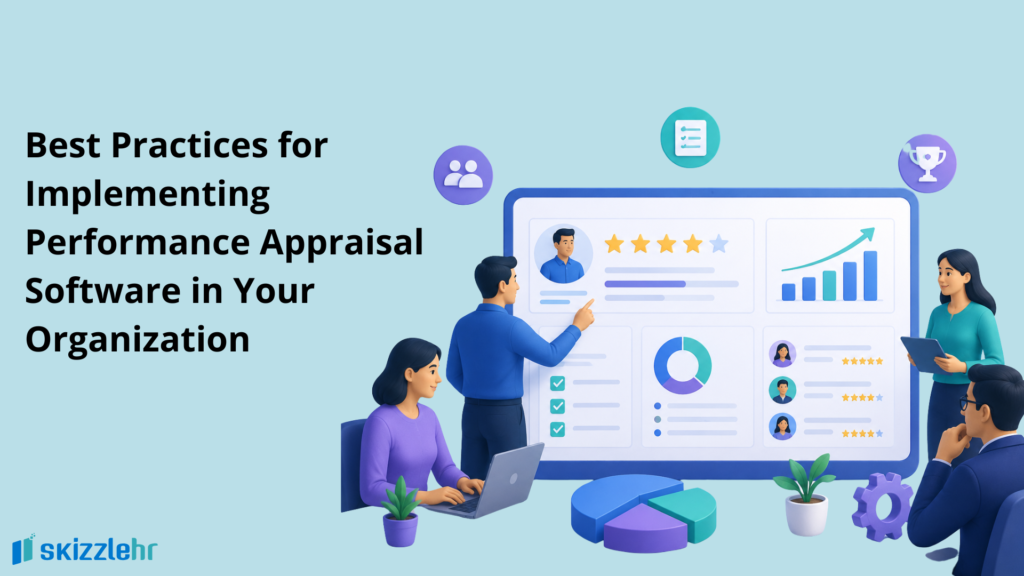
Performance management has evolved far beyond annual reviews and paper-based evaluations. Modern organizations are now focusing on continuous feedback, goal alignment, employee development, and data-driven decision-making. As businesses grow and workforce expectations change, relying on outdated appraisal methods can limit productivity, transparency, and employee engagement.
This is why organizations are increasingly investing in performance appraisal software to streamline evaluations, improve communication, and build high-performing teams. However, simply purchasing software is not enough. Successful implementation requires the right strategy, clear objectives, and employee adoption.
In this blog, we’ll explore the best practices for implementing a modern Performance Management System and how organizations can maximize its value for long-term success.
Why Organizations Are Moving Toward Performance Appraisal Software ?
Traditional appraisal systems often create challenges such as:
- Delayed feedback cycles
- Inconsistent evaluations
- Lack of transparency
- Poor goal tracking
- Manual documentation errors
- Limited employee engagement
Modern businesses need a smarter and more agile approach to performance management. A robust performance management system helps organizations automate reviews, track goals in real time, and create a culture of continuous improvement.
More importantly, today’s AI-powered systems are enabling HR teams to make faster, data-backed decisions while reducing administrative burden.
Best Practices for Implementing Performance Management System
1. Define Clear Performance Management Goals
Before implementing any software, organizations must identify what they want to achieve through the system. Ask questions such as:
- Do you want to improve employee productivity?
- Are you focusing on continuous feedback?
- Do you need better goal alignment?
- Are you trying to reduce manual HR processes?
- Do managers need deeper workforce insights?
Having clear objectives helps you choose the right software features and create a structured implementation plan.
For example, some organizations prioritize employee engagement, while others focus more on KPI tracking and analytics. Aligning the software with business goals ensures better long-term outcomes.
2. Choose a User-Friendly Performance Management System
One of the biggest reasons performance software implementations fail is poor user adoption. If the system is difficult to use, employees and managers may avoid using it consistently. An effective performance management system should offer:
- Simple and intuitive dashboards
- Easy goal-setting workflows
- Mobile accessibility
- Automated notifications
- Real-time feedback options
- Easy review scheduling
The easier the platform is to navigate, the higher the engagement across teams.
User experience plays a major role in the success of any HR technology implementation.
3. Align Goals Across the Organization
Performance management becomes more impactful when employee goals align with organizational objectives. Modern performance management system allows organizations to create structured goal hierarchies where:
- Company objectives align with department goals
- Team goals connect to business KPIs
- Individual goals contribute to larger outcomes
This creates greater transparency and accountability across the organization.
Employees gain better clarity about how their work contributes to business growth, which often improves motivation and engagement.
4. Shift from Annual Reviews to Continuous Feedback
Traditional yearly appraisals often fail because feedback becomes delayed and less actionable. Modern organizations are now moving toward continuous performance conversations. A strong Performance Management System should support:
- Real-time feedback
- Monthly or quarterly check-ins
- Peer recognition
- Continuous coaching
- Instant performance updates
Frequent feedback helps employees improve faster and creates stronger communication between managers and teams.
Continuous performance management also reduces stress associated with annual reviews and makes appraisals more accurate.
5. Train Managers and Employees Properly
Even the best software cannot deliver results without proper training. Organizations should conduct onboarding and training sessions to help employees understand:
- How to set goals
- How to provide constructive feedback
- How to complete reviews
- How to use dashboards and reports
- How to track performance progress
Managers especially need guidance on conducting meaningful performance conversations.
Training increases confidence in the system and encourages better adoption across departments.
6. Use AI and Automation for Smarter Performance Management
Artificial Intelligence is transforming the way organizations manage employee performance. AI-powered performance management system can help organizations:
- Generate smart performance goals
- Identify employee performance trends
- Recommend development plans
- Reduce evaluation bias
- Automate reminders and workflows
- Deliver actionable insights
AI simplifies administrative tasks while helping managers make more informed decisions.
Organizations implementing AI-driven performance systems often experience improved efficiency, faster review cycles, and more accurate evaluations.
7. Customize the Software to Match Organizational Needs
Every organization has different performance management requirements. Some businesses may use KPIs, while others focus on OKRs or competency-based reviews.
Your Performance Management System should be flexible enough to support:
- Custom review cycles
- Different rating scales
- Department-specific goals
- Multiple appraisal methods
- Configurable workflows
- Role-based access controls
Customization ensures the software adapts to your business processes rather than forcing employees into rigid workflows.
8. Encourage Transparency and Employee Participation
Performance management should not feel like a one-sided process.
Modern organizations are encouraging employees to actively participate in their development journey. A transparent Performance Appraisal Software allows employees to:
- Track their goals
- Access feedback instantly
- Share self-assessments
- Request manager feedback
- Monitor progress continuously
This creates a more collaborative and engaging workplace culture.
Employees who feel involved in the process are more likely to stay motivated and aligned with company goals.
9. Monitor Performance Metrics and Analytics
One of the biggest advantages of digital performance systems is access to real-time analytics. Organizations should regularly monitor metrics such as:
- Goal completion rates
- Employee productivity trends
- Review completion status
- High-performing teams
- Skill gaps
- Engagement levels
These insights help HR leaders make proactive decisions and improve workforce planning.
Analytics also enable organizations to identify top talent, address performance gaps early, and create stronger employee development strategies.
10. Integrate Performance Software with Other HR Functions
Performance management works best when connected with broader HR operations. An integrated system can connect performance data with:
- Payroll
- Attendance
- Learning and development
- Employee engagement
- Rewards and recognition
- Succession planning
This creates a unified employee experience while reducing manual data management.
Integration also improves accuracy and enables HR teams to make more strategic decisions.
Common Mistakes to Avoid During Implementation
While implementing Performance Appraisal Software, organizations should avoid:
- Launching without proper communication
- Overcomplicating review processes
- Ignoring employee feedback
- Focusing only on ratings
- Delaying manager training
- Choosing software without scalability
Successful implementation requires both technology and cultural alignment.
The goal should be to create a system that supports growth, collaboration, and continuous improvement.
The Future of Performance Management
Performance management is rapidly becoming more intelligent, employee-centric, and data-driven. In the future, organizations will increasingly rely on:
- AI-powered recommendations
- Predictive workforce analytics
- Real-time engagement tracking
- Continuous feedback loops
- Personalized development plans
Businesses that modernize their appraisal processes today will be better prepared to build agile and high-performing teams tomorrow.
How SkizzleHR Simplifies Performance Management ?
Organizations looking for a modern and intelligent solution can benefit significantly from SkizzleHR’s AI-powered performance management software.
SkizzleHR’s advanced performance appraisal software helps businesses streamline the entire performance lifecycle through automation, real-time tracking, and smart analytics. With SkizzleHR, organizations can:
- Create and manage goals effortlessly
- Conduct continuous performance reviews
- Enable real-time feedback and collaboration
- Track employee progress with intuitive dashboards
- Automate appraisal workflows
- Generate insightful performance reports
- Improve transparency across teams
One of SkizzleHR’s standout capabilities is its AI-Driven Performance Management system. Its AI-powered features help organizations:
- Generate impactful goals instantly using AI prompts
- Align employee objectives with business priorities
- Simplify review management
- Deliver data-backed performance insights
- Enhance manager decision-making
By combining automation, AI intelligence, and user-friendly workflows, SkizzleHR enables organizations to transform traditional appraisals into a continuous growth-driven experience.
As businesses continue to evolve, implementing a smart and scalable performance management system like SkizzleHR can help create a more productive, engaged, and future-ready workforce.
Schedule a FREE demo!
You might also like

Start Growing with SkizzleHR
Our team is ready to guide you through an interactive demonstration, tailored to your business needs.
Request a demo