Smarter Decisions in 2026: How SkizzleHR HR Analytics Drives Business Growth
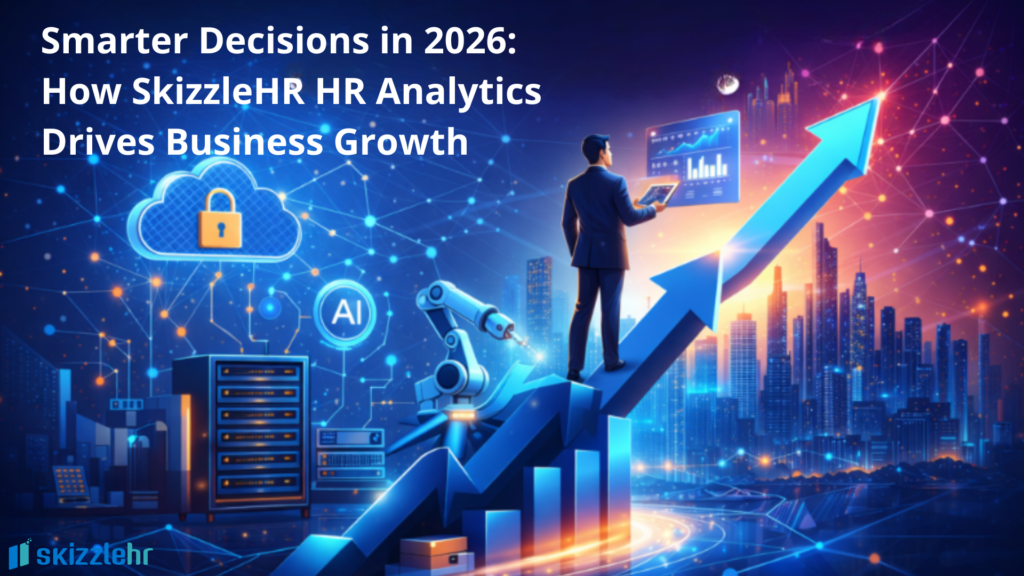
In 2026, businesses no longer rely on instinct alone to make people-related decisions. As workforces become more distributed, skills evolve rapidly, and competition for talent intensifies, data has emerged as the most reliable growth driver. This shift has made HR analytics software a critical tool; not just for HR teams, but for business leaders across the organization.
Modern HR analytics goes far beyond basic headcount reports. It empowers companies to understand employee behavior, predict trends, reduce risks, and align workforce strategies with business goals. Organizations that leverage the right workforce analytics tools are better positioned to grow sustainably, adapt quickly, and stay ahead in a data-first economy.
HR Analytics Software: The Evolution of HR Analytics in 2026
Traditional HR reporting focused on historical data, such as attendance summaries, attrition numbers, and payroll costs. While useful, these reports rarely influenced strategic decisions. In 2026, workforce analytics tools have evolved into a predictive and prescriptive function that answers critical questions such as:
- Why is attrition rising in specific teams?
- Which roles deliver the highest ROI?
- How does attendance impact productivity and payroll costs?
- What skills gaps will affect growth in the next 12 months?
Advanced workforce analytics tools integrate data from multiple HR functions; attendance, payroll, performance, learning, and engagement; to create a unified, real-time view of the workforce.
1. Turning Workforce Data into Business Intelligence
One of the biggest advantages of HR analytics is its ability to convert raw workforce data into actionable insights. Instead of manually compiling reports from different systems, HR and leadership teams can access dashboards that highlight trends, anomalies, and opportunities instantly.
For example, workforce analytics tools can identify patterns between overtime and burnout, correlate absenteeism with team performance, or highlight departments with rising compensation costs. These insights allow leaders to intervene early, optimize resource allocation, and improve overall operational efficiency.
2. Driving Productivity Through Data-Driven Decisions
Productivity remains a key growth metric in 2026. Modern HR tools help organizations measure productivity more accurately by combining time, attendance, and performance data.
By understanding how employees spend their time, how workloads are distributed, and where inefficiencies exist, businesses can redesign processes and roles for better outcomes. This data-backed approach removes guesswork and ensures decisions are fair, transparent, and aligned with performance goals.
3. Enhancing Talent Retention and Engagement
Employee attrition is costly; not just financially, but in terms of lost knowledge and morale. Workforce analytics tools enable organizations to analyze attrition trends, identify high-risk groups, and uncover the root causes of disengagement.
By tracking factors such as tenure, role changes, compensation growth, and attendance patterns, HR teams can design targeted retention strategies. Proactive action based on analytics helps organizations retain top talent and build a more engaged workforce.
4. Smarter Workforce Planning and Cost Optimization
In an uncertain economic environment, strategic workforce planning is essential. HR analytics software provides leaders with the data needed to forecast hiring needs, manage workforce costs, and plan expansions or restructuring effectively.
By analyzing historical trends and current workforce data, organizations can model future scenarios and make informed budgeting decisions. This not only improves financial control but also ensures the workforce is aligned with long-term business objectives.
5. Improving Compliance and Risk Management
Compliance requirements continue to evolve, and non-compliance can result in significant penalties. HR analytics helps organizations monitor compliance-related metrics such as attendance irregularities, overtime limits, and statutory adherence.
Real-time alerts and reports enable quicker corrective actions, reducing risk exposure. For leadership teams, this visibility ensures governance and compliance remain an integral part of business strategy.
Why HR Analytics Is a Competitive Advantage in 2026?
In 2026, competitive advantage is built on speed, accuracy, and insight. Organizations that rely solely on static reports struggle to keep pace with change. Those that invest in intelligent workforce analytics tools gain the ability to anticipate challenges and seize opportunities faster than their competitors.
HR analytics software bridges the gap between people data and business performance, making HR a strategic partner rather than a support function.
How SkizzleHR HR Analytics Powers Smarter Growth?
SkizzleHR brings this next-generation approach to HR analytics by combining powerful insights with ease of use. Designed for modern businesses, SkizzleHR’s HR analytics software unifies data from payroll, attendance, leave, performance, and employee records into a single, intuitive dashboard.
With minimal taps and streamlined workflows, decision-makers can access real-time workforce insights without complexity. SkizzleHR’s workforce analytics tools help leaders identify trends, control costs, improve productivity, and plan proactively—turning data into measurable business outcomes.
By eliminating data silos and simplifying analytics, SkizzleHR enables organizations to move from reactive reporting to proactive decision-making. In 2026 and beyond, this ability to act on insights—quickly and confidently—is what drives sustainable business growth.
You might also like


Start Growing with SkizzleHR
Our team is ready to guide you through an interactive demonstration, tailored to your business needs.
Request a demo