How Cloud HRMS Supports Hybrid and Remote Teams in IT Companies
Introduction
Cloud HRMS for IT companies is becoming essential as the traditional office is no longer the only place where work happens. In IT companies, one employee may be working from a home office in Mumbai, another may be collaborating from Bengaluru, while a third may be sitting in a coworking space in Delhi. Their manager could be in another time zone altogether.
For employees, this flexibility can be liberating. For HR teams, however, it creates a new challenge: How do you manage a workforce that isn’t always in the same place? Attendance, leave requests, employee communication, payroll, performance, documents, and compliance all need to work seamlessly across locations.
A cloud-based HRMS gives HR teams a centralized digital system to manage employees regardless of where they work. Instead of relying on spreadsheets, emails, separate attendance tools, and manual approvals, organizations can bring essential HR processes together in one accessible platform.
Quick Answer:
Cloud HRMS: Key Benefits
- Centralized HR Data
- Remote & Hybrid Attendance
- Automated HR Workflows
- Mobile HR Access
- Workforce Visibility
- Employee Self-Service
- Real-Time HR Analytics
- Streamlined Leave Management
Let’s explore how cloud HR technology can make hybrid and remote workforce management simpler for IT companies.
What is a Cloud HRMS?
A cloud HRMS is a human resource management system hosted online, allowing authorized users to access HR processes and employee information through the internet. Unlike traditional HR software that may depend heavily on local infrastructure, Cloud HRMS Software can be accessed from different locations and devices. For IT companies with distributed teams, this flexibility is particularly useful. HR professionals can manage employee information, attendance, leave, payroll, documents, and other HR activities without requiring employees to be physically present in the office. More importantly, employees can access many HR services themselves. This makes cloud technology a natural fit for modern workplaces where flexibility and accessibility are becoming standard expectations.
Why IT Companies Need Cloud HRMS for Hybrid and Remote Teams
Managing a traditional office workforce is relatively straightforward. Employees arrive at a location, attendance is recorded, HR teams are available physically, and documents can be exchanged directly. Hybrid and remote teams change this model. HR needs visibility without micromanaging employees. Managers need reliable information without constantly asking HR for reports. Employees need access to HR services without waiting for someone to respond to an email. A modern HRMS for IT Companies helps solve this by creating a centralized digital infrastructure for people management. Here are some of the ways it can support distributed teams.
1. Centralized Remote Employee Management
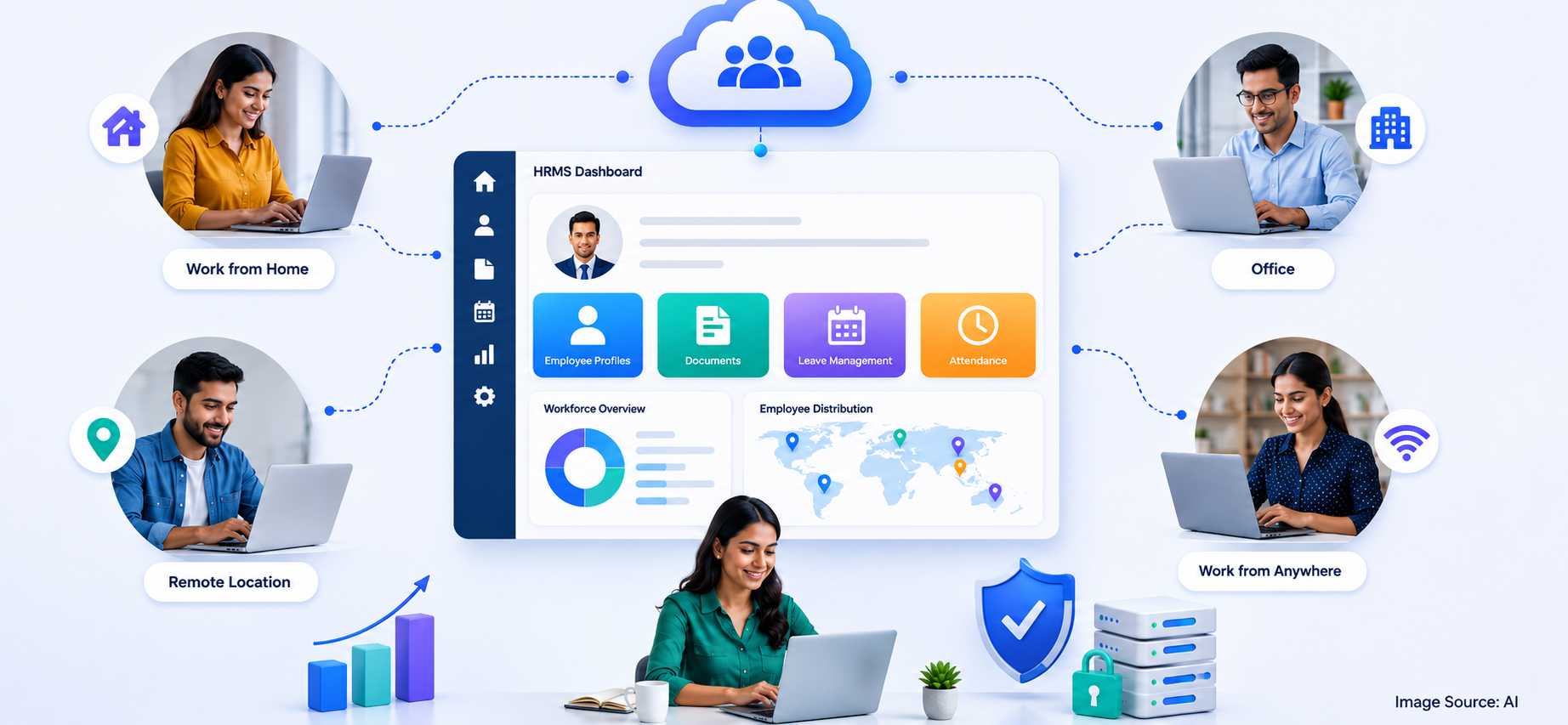
When employees are spread across different locations, HR needs a single source of truth. A cloud HRMS can centralize employee profiles, employment information, documents, leave records, attendance data, and other HR information. This makes Remote Employee Management easier because HR teams don’t have to maintain separate spreadsheets or systems for employees working from home and those working from the office. Managers can also get access to relevant information based on their roles and responsibilities. The result? Less administrative confusion and better visibility across the workforce.
2. Simplifying Employee Attendance Tracking
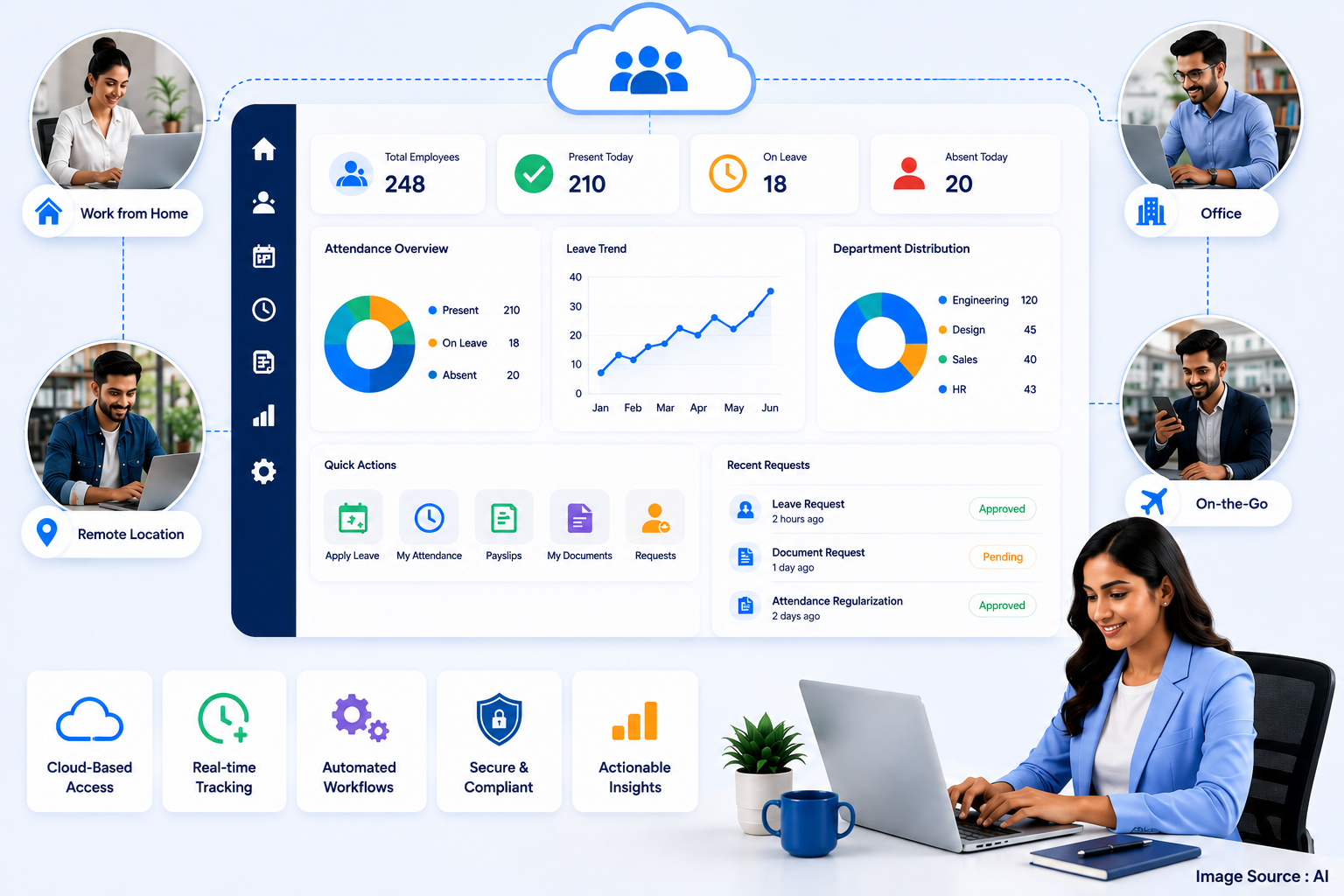
Attendance becomes more complicated when employees don’t follow a traditional 9-to-6 office routine. Some employees may work from home every day. Others may come into the office two or three days a week. Some may work from client locations or while travelling. A cloud HRMS can support flexible attendance processes through Employee Attendance Tracking capabilities. Instead of relying exclusively on physical biometric machines, organizations can use digital attendance mechanisms suited to their workforce. This allows HR to maintain attendance records while supporting different working arrangements.
3. Remote Attendance Management Without Micromanagement
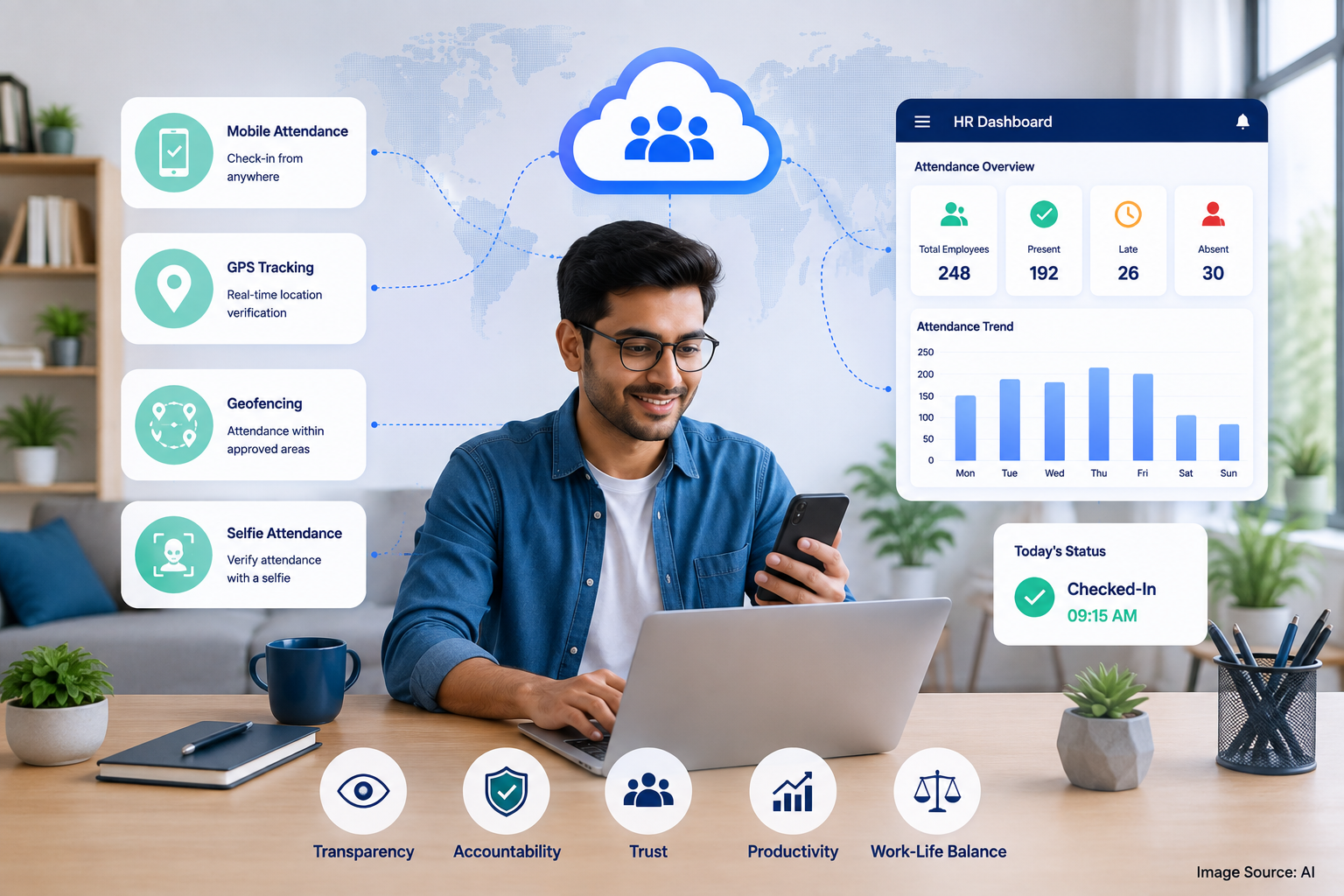
One of the biggest concerns with remote work is maintaining visibility into attendance without creating an intrusive work environment. Remote Attendance Management can provide HR and managers with attendance information while allowing employees to record attendance digitally. Depending on the organization’s policies and technology setup, features such as mobile attendance, GPS-based tracking, geofencing, or selfie-based attendance can add another layer of accountability. The objective shouldn’t be to constantly monitor employees. Instead, it should be about creating a transparent system where employees know how attendance is recorded and managers have reliable information when they need it.
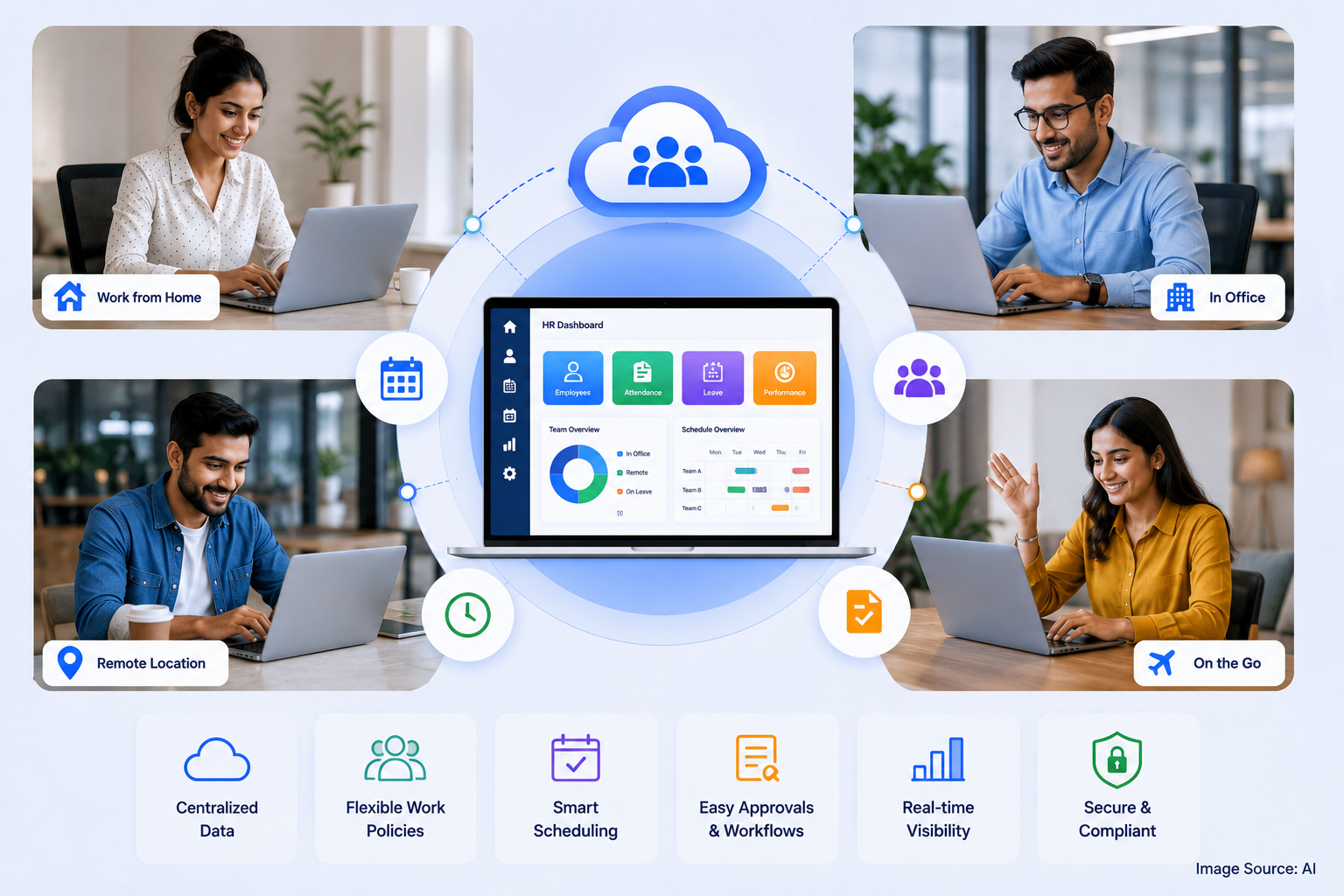
4. Making Hybrid Workforce Management Easier
Hybrid teams require HR policies that account for multiple work environments. Employees may have different office schedules, work-from-home arrangements, shifts, or location requirements. Hybrid Workforce Management becomes easier when HR processes are centralized. For example, organizations can manage attendance, leave, employee schedules, and approvals through a single system rather than maintaining separate processes for office-based and remote employees. This creates consistency while still allowing businesses to implement flexible workplace policies. For companies searching for cloud HRMS for hybrid and remote teams, flexibility should therefore be one of the most important evaluation criteria.
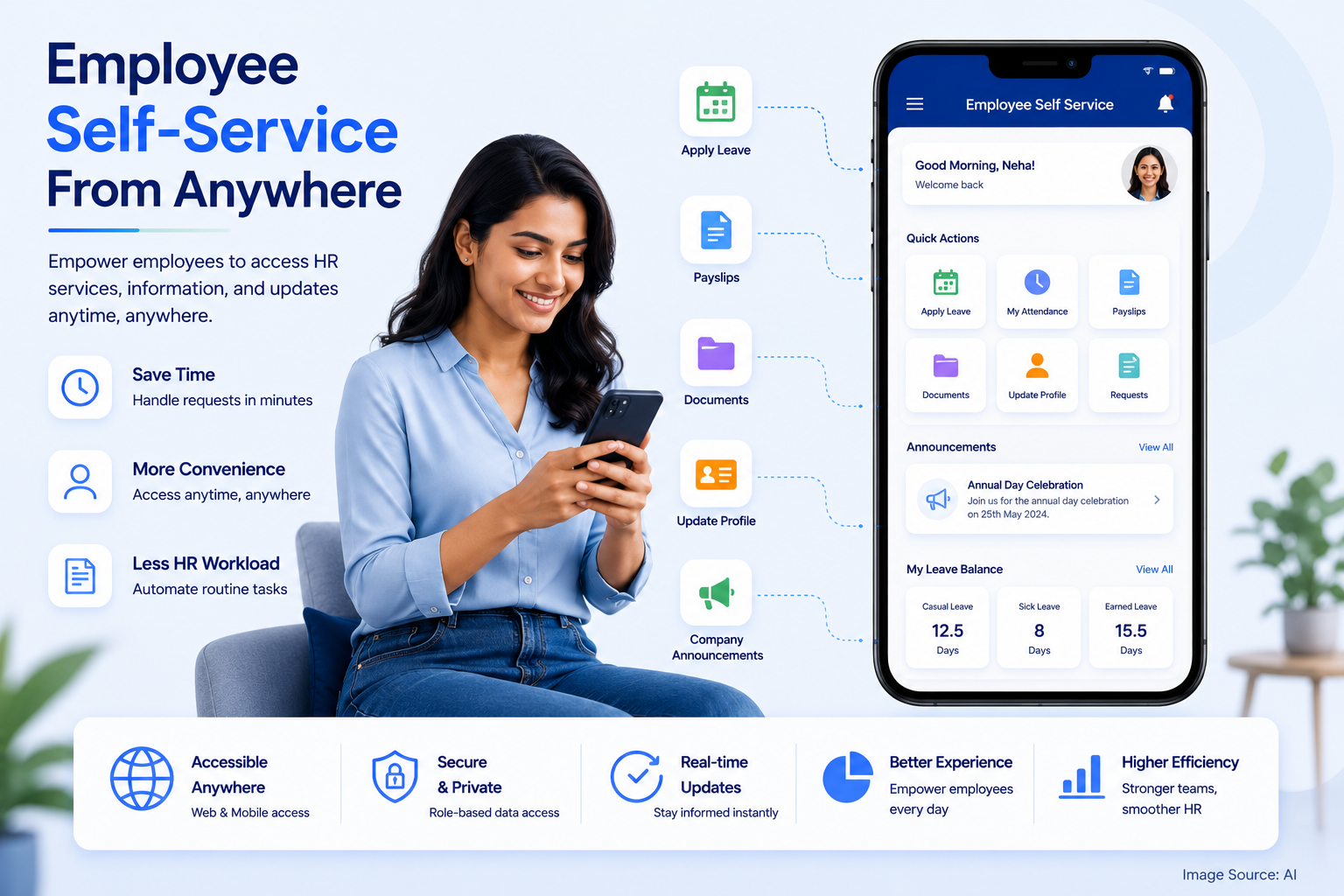
5. Employee Self-Service From Anywhere
Imagine an employee working remotely who needs to download a salary slip, apply for leave, access a document, or update personal information. Without employee self-service, the request may become another email for HR to process. With Employee Self-Service, employees can complete many routine HR tasks themselves. A cloud HRMS can give employees access to relevant HR services through web or mobile platforms, depending on the system. This improves convenience for employees and reduces repetitive administrative work for HR. For distributed teams, this is especially valuable because employees don’t need to visit an HR desk or wait for someone in the office to process routine requests.
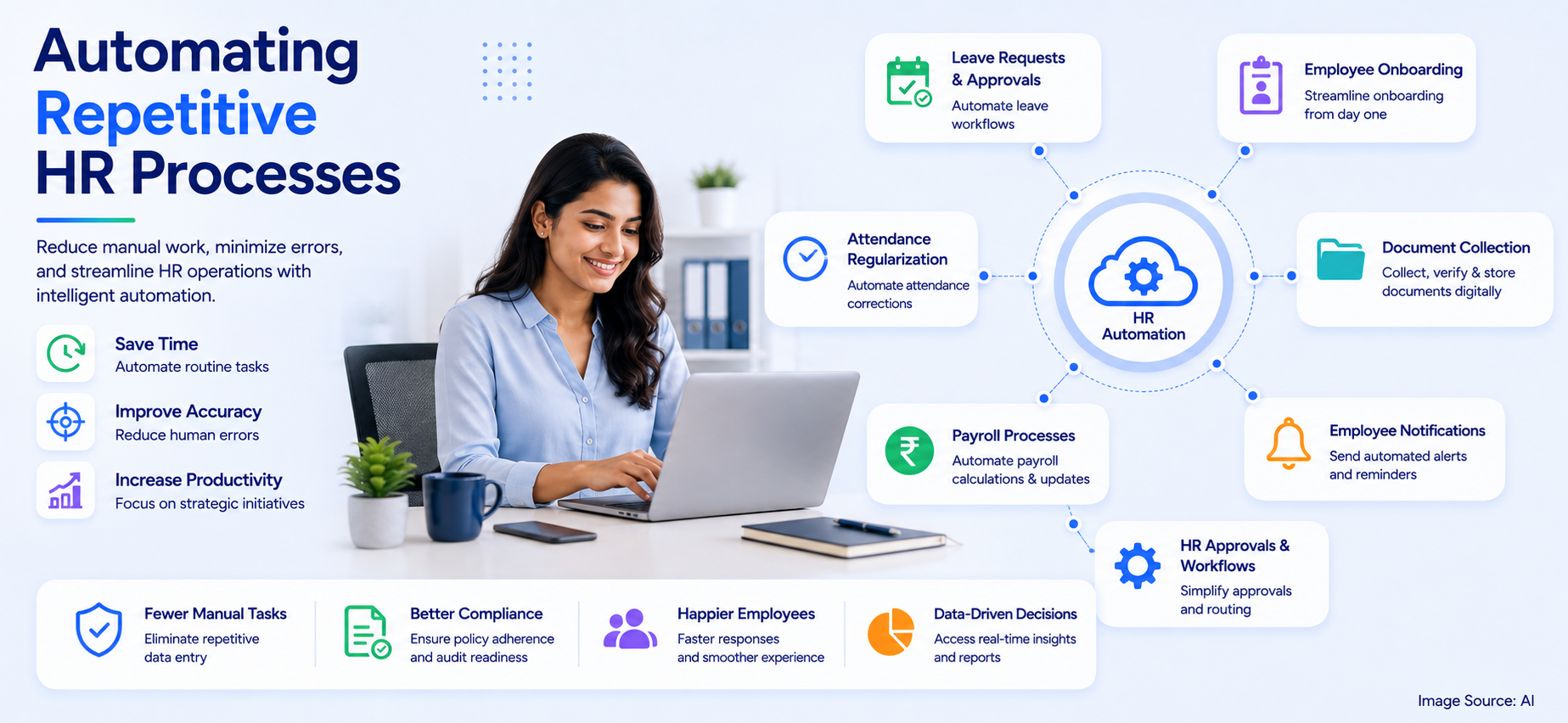
6. Automating Repetitive HR Processes
Hybrid work can increase administrative complexity. More locations can mean more attendance records, leave requests, approvals, documents, and employee queries. This is where HR Automation can make a significant difference. Instead of manually processing every request, organizations can automate workflows such as:
- Leave requests and approvals
- Attendance regularization
- Employee onboarding
- Document collection
- Employee notifications
- Payroll-related processes
- HR approvals and workflows
Automation reduces repetitive work and helps HR teams focus on higher-value activities such as employee engagement, workforce planning, and talent development.
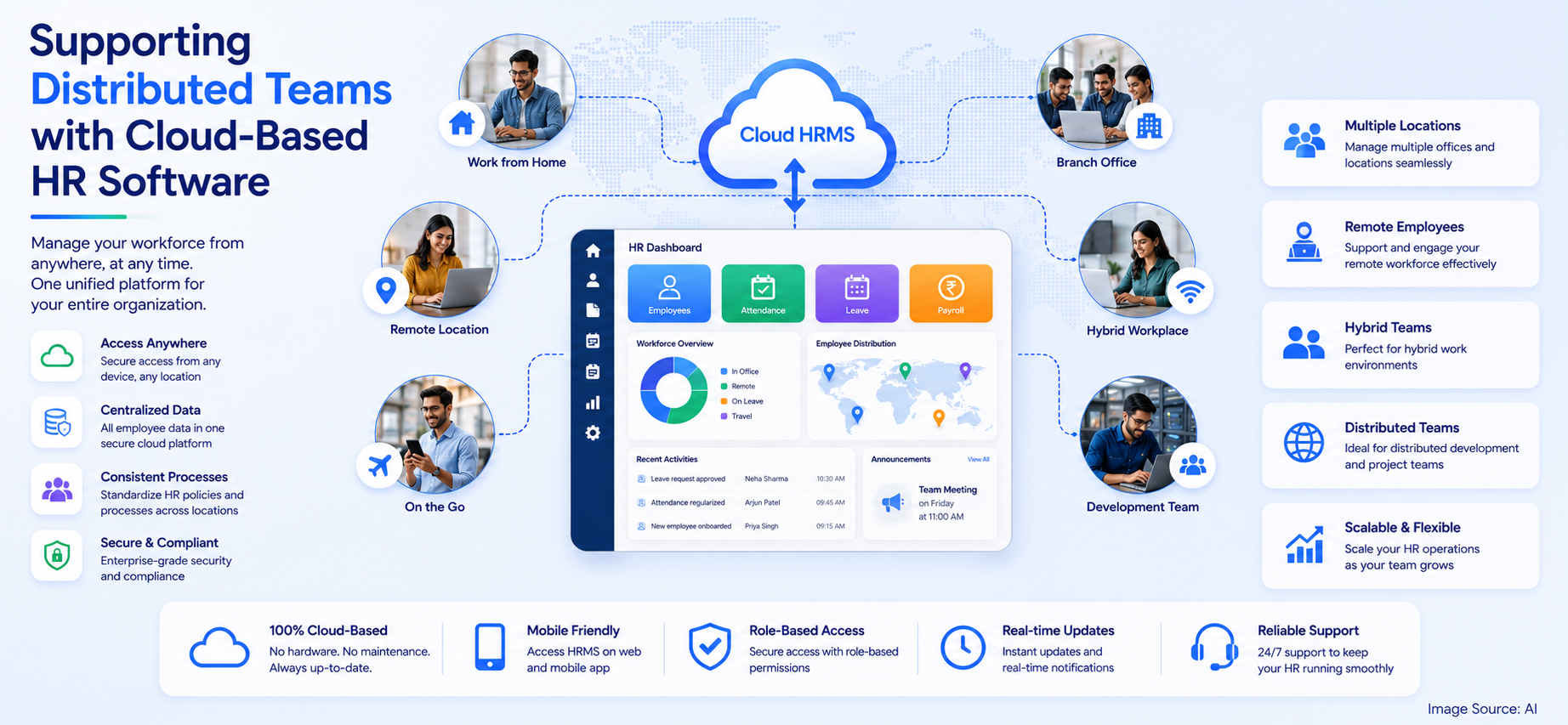
7. Supporting Distributed Teams With Cloud-Based HR Software
One of the biggest advantages of Cloud-Based HR Software is accessibility. HR teams don’t have to be tied to a particular office to manage HR operations. Authorized users can access the system from wherever they are, provided they have the required internet access and permissions. This is particularly relevant for IT companies with:
- Multiple offices
- Remote employees
- Hybrid teams
- Distributed development teams
- Employees working across cities
- Flexible work arrangements
A centralized cloud platform can help maintain consistency across these different employee groups.
8. Improving Communication and Policy Accessibility
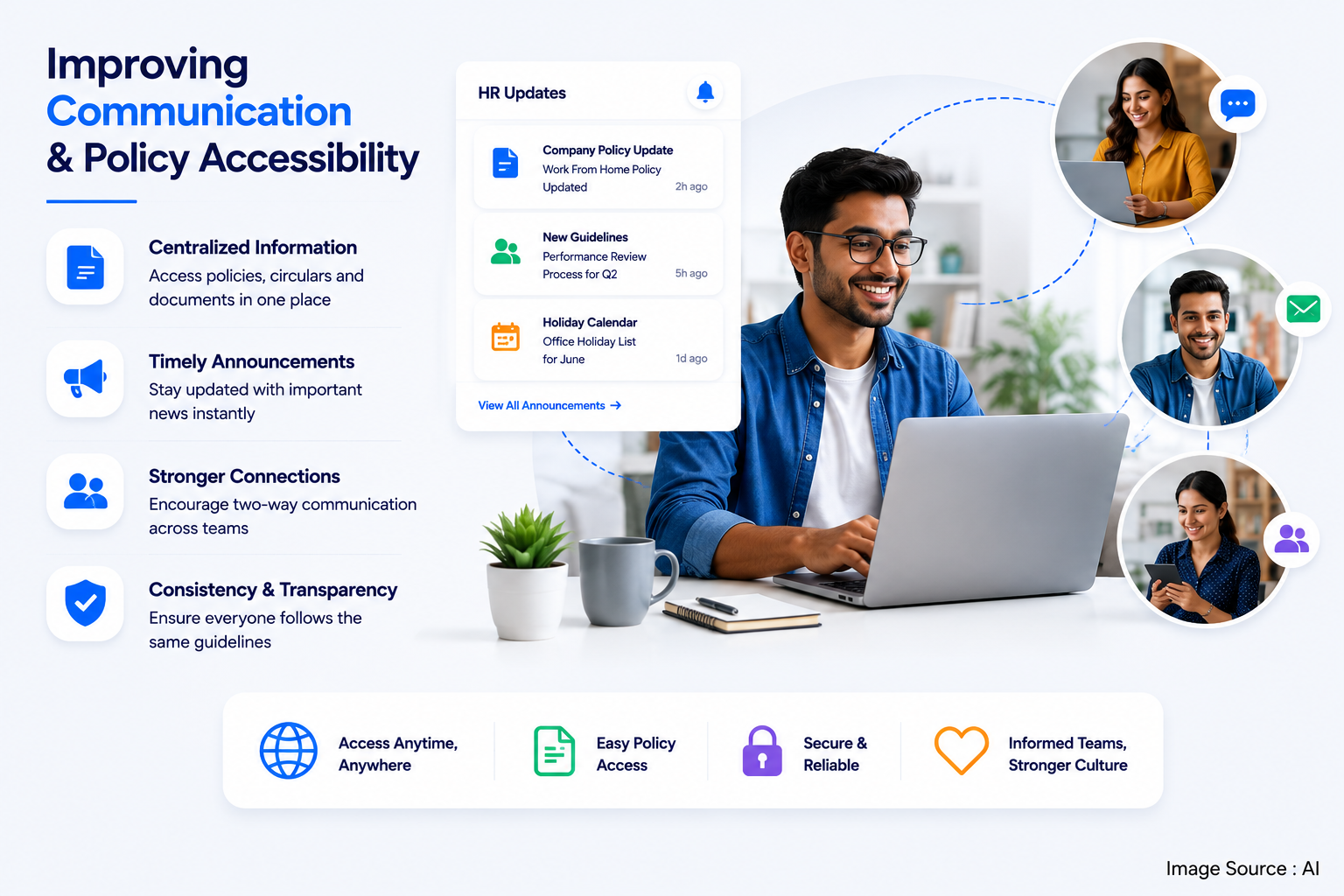
Remote employees can sometimes feel disconnected from organizational processes simply because they aren’t physically present. A cloud HRMS can help make important HR information more accessible.Clear and accessible communication is especially important in remote and hybrid work environments, where employees may have fewer opportunities for face-to-face interaction. Employees can access relevant documents, policies, announcements, letters, and HR information through a centralized system. This reduces dependence on scattered email threads and makes it easier for employees to find the information they need. For HR teams, it also provides a structured way to distribute important information across a distributed workforce.
9. Better HR Visibility and Reporting
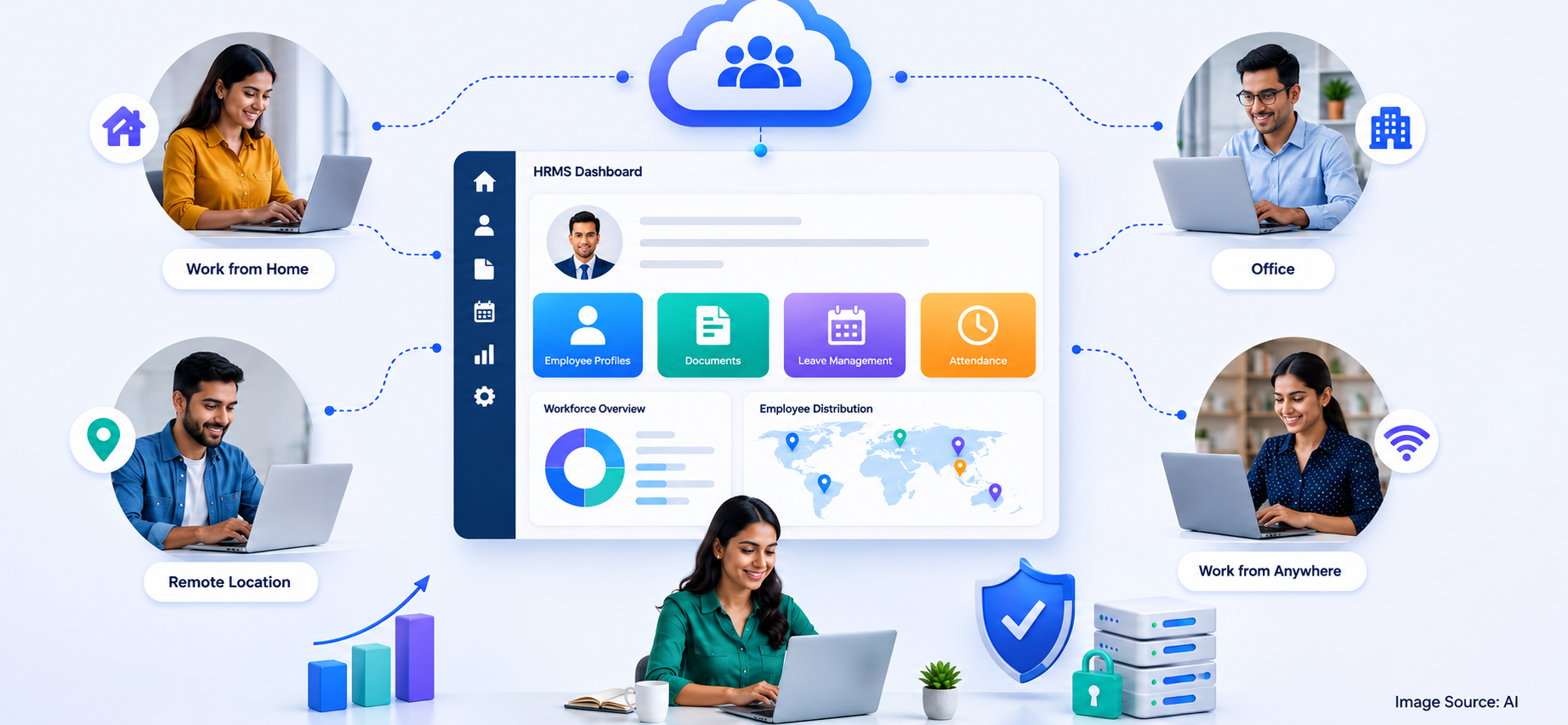
Managing a remote workforce doesn’t mean HR should operate without visibility. A modern HRMS can provide dashboards and reports related to attendance, leave, employee information, and other HR activities. These insights can help HR and managers identify patterns such as attendance irregularities, absenteeism, leave trends, or workforce distribution. Instead of making decisions based on assumptions, HR leaders can use centralized workforce information to make more informed decisions. This is particularly useful for growing IT companies where employee numbers and locations can change rapidly.
10. Supporting a Better Employee Experience
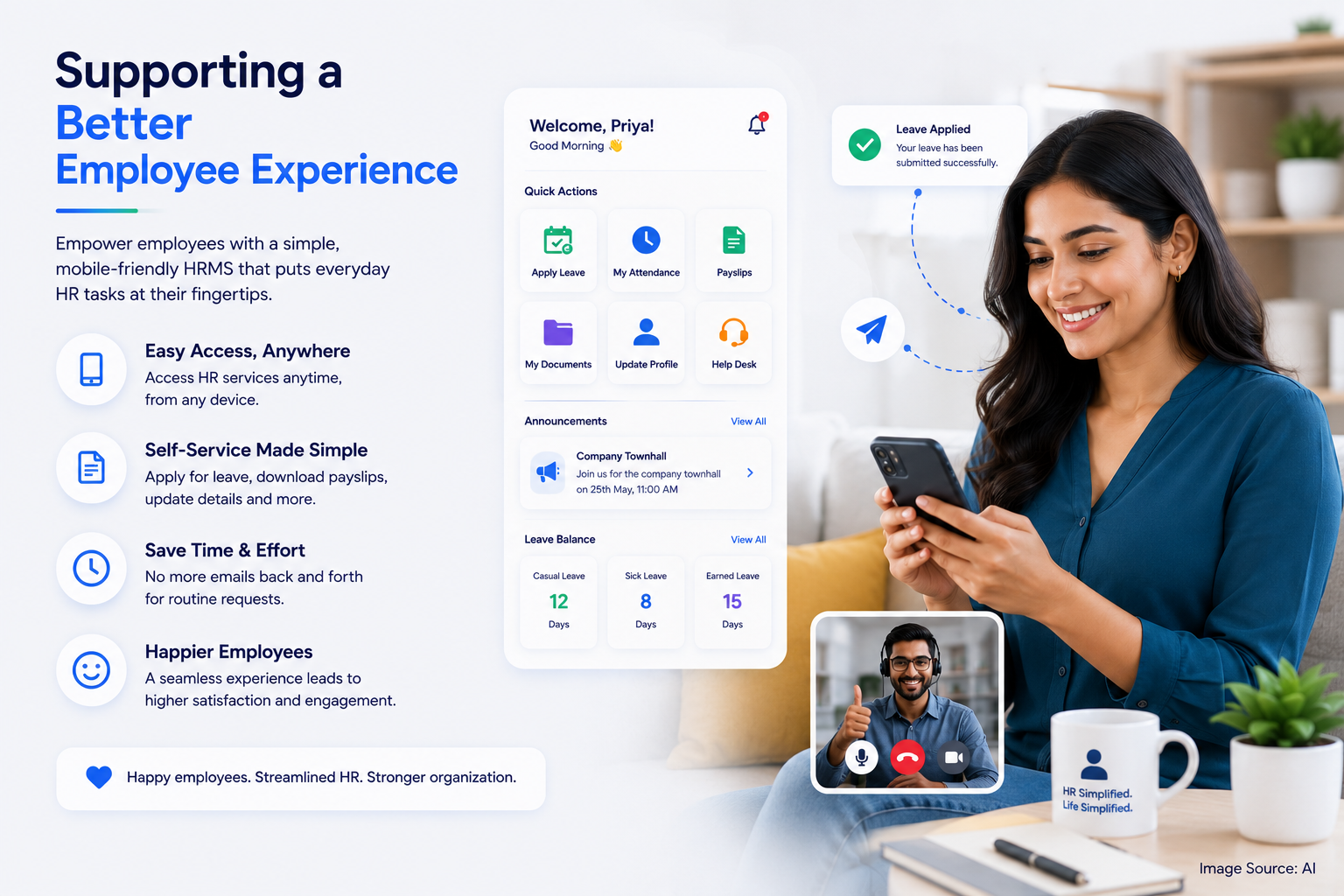
Technology shouldn’t only make HR’s job easier. It should make employees’ lives easier too. A good HRMS software for remote employees should allow employees to complete routine HR tasks with minimal friction. For example, an employee shouldn’t need to send three emails just to access a payslip or apply for leave. A mobile-friendly HRMS can put everyday HR services within easy reach. This creates a smoother employee experience while reducing unnecessary communication between employees and HR.
What Should IT Companies Look for in a Cloud HRMS?
Choosing the best cloud HRMS for IT companies requires looking beyond basic employee databases. Organizations should consider whether the platform supports the realities of modern distributed work. Key capabilities can include:
| Capability | Why It Matters for IT Companies |
|---|---|
| Cloud accessibility | Enables HR access across locations |
| Employee self-service | Reduces dependency on HR for routine requests |
| Remote attendance | Supports employees working outside the office |
| Mobile HRMS | Gives employees access to HR services on the go |
| Leave management | Simplifies leave requests and approvals |
| HR automation | Reduces repetitive administrative work |
| Employee records | Centralizes workforce information |
| Reports & analytics | Helps HR make data-driven decisions |
| Payroll integration | Connects attendance and employee data with payroll |
| Role-based access | Helps control access to sensitive HR information |
The right system should also be scalable. What works for a 50-person startup may not be sufficient when the organization reaches 500 or 5,000 employees.
How HRMS Supports Hybrid Workforces: The Bigger Picture?
The value of HR technology isn’t simply about replacing spreadsheets. The bigger opportunity is creating a connected employee ecosystem. When attendance, leave, payroll, documents, employee information, and self-service capabilities operate through one platform, HR teams get better visibility and employees get a more consistent experience. This is why how HRMS supports hybrid workforces is becoming an important consideration for modern organizations. For IT companies in particular, where flexible work is often closely connected to talent attraction and employee expectations, the HR technology stack needs to be as flexible as the workforce itself.
Manage Your Distributed Workforce With SkizzleHR
Managing a distributed IT workforce doesn’t have to mean managing multiple disconnected HR processes. SkizzleHR is a comprehensive HRMS designed to bring essential HR operations together through a centralized platform. From payroll and attendance to leave management, employee self-service, documents, and HR workflows, SkizzleHR helps organizations streamline everyday people operations. For companies looking for remote employee management software for IT companies, features such as mobile-based attendance, GPS/KM tracking, geofencing, selfie attendance, live tracking, on-duty requests, and integrated HR workflows can help support different working environments. Its cloud-based approach also enables HR teams and employees to access relevant HR processes without being tied to a physical office.
Final Thoughts
Hybrid and remote work have changed where employees work—but HR still needs to manage the same fundamental processes: attendance, leave, payroll, documents, communication, compliance, and employee experience. A Cloud HRMS for IT Companies brings these processes into one connected environment, helping organizations improve visibility, automate routine tasks, and give employees greater control over everyday HR activities. For growing IT companies, the question is no longer simply whether they need HR software. It’s whether their HR technology is flexible enough to support the workforce they are building. Looking for a cloud HR software for managing distributed teams?
Explore SkizzleHR and schedule a free demo to see how you can simplify HR management for your hybrid and remote workforce.
You might also like

Start Growing with SkizzleHR
Our team is ready to guide you through an interactive demonstration, tailored to your business needs.
Request a demo