5 Ways HRMS Streamlines Shift Planning in Manufacturing Companies
Introduction
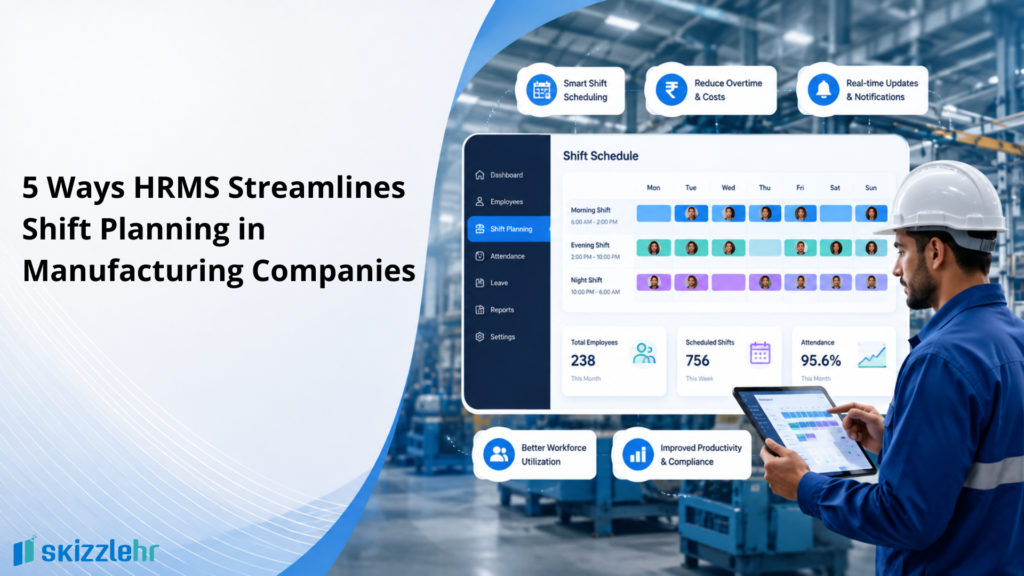
Shift Management Software can help manufacturing companies simplify complex employee schedules, rotating shifts, attendance, leave, overtime, and workforce planning.In manufacturing, the production floor rarely follows a neat 9-to-5 routine. One team may start at 6 AM. Another takes over at 2 PM. The night shift begins just as most people are heading home. Add weekly offs, leave requests, overtime, skill requirements, absenteeism, and sudden production demands—and shift planning can quickly become one of the most complicated jobs for an HR or operations team. For many factories, employee rosters are still managed using spreadsheets, WhatsApp messages, phone calls, or a combination of all three. It may work when the workforce is small. But as the number of employees, shifts, departments, and locations grows, manual scheduling becomes difficult to maintain. This is where shift management software can make a practical difference. An HRMS can bring shift planning, attendance, employee information, leave, and workforce data into one place, helping HR teams create schedules that are easier to manage and easier for employees to follow.
Quick Answer:
Shift Management Software: Key Benefits
- Centralized Shift Planning
- Faster Employee Scheduling
- Easy Shift Changes
- Better Absence Management
- Attendance Integration
- Overtime Tracking
- AI-Assisted Scheduling
- Improved Workforce Visibility
How Shift Management Software Replaces Spreadsheet-Based Scheduling
1. It Replaces Spreadsheet-Based Shift Planning
Ask an HR manager in a manufacturing company about shift planning, and there’s a good chance you’ll hear about spreadsheets. Spreadsheets are familiar, flexible, and inexpensive. But they can become difficult to manage when the workforce gets larger. Imagine planning shifts for 300 employees across three shifts, five departments, and multiple weekly offs. Now add 15 employees who have applied for leave, five employees who are absent unexpectedly, and a production team that needs specific skilled workers on the morning shift. One change can lead to several other changes in the roster. With Shift Planning Software, HR teams can create and manage employee schedules from a centralized system instead of maintaining multiple versions of a spreadsheet. Employees can be assigned to shifts based on predefined schedules, departments, locations, or other workforce requirements. Changes can also be managed without rebuilding the entire roster from scratch. The result is simple: less time spent maintaining schedules and fewer opportunities for manual errors. For factories looking for the best shift management software for manufacturing companies, this ability to centralize roster planning should be one of the first things to evaluate.
2. It Makes Employee Shift Planning More Structured
Manufacturing shift planning isn’t simply about deciding who works when. A good roster needs to consider:
- Shift timings
- Employee availability
- Weekly offs
- Leave
- Department requirements
- Employee roles and skills
- Overtime
- Shift rotations
- Attendance patterns
When all this information sits in different places, creating a balanced schedule becomes harder. A modern workforce scheduling software can connect employee and attendance information with shift planning. HR and managers can work with a clearer picture of workforce availability before assigning employees. For example, suppose a production line needs 20 operators for the evening shift. Instead of manually checking attendance records, leave spreadsheets, and employee lists, HR can work from centralized workforce information. This makes employee shift planning more organized and reduces the back-and-forth between HR, supervisors, and employees. It also helps managers move away from the “Who is available today?” approach toward a more planned way of managing their workforce.
3. It Helps Handle Shift Changes and Unexpected Absences
This is where manufacturing shift planning gets real. A schedule may look perfect on Monday morning. By Tuesday, someone is on leave. On Wednesday, another employee calls in sick. By Thursday, production demand increases and the supervisor needs additional workers. Factories need flexibility because the workforce doesn’t always behave according to the original roster.
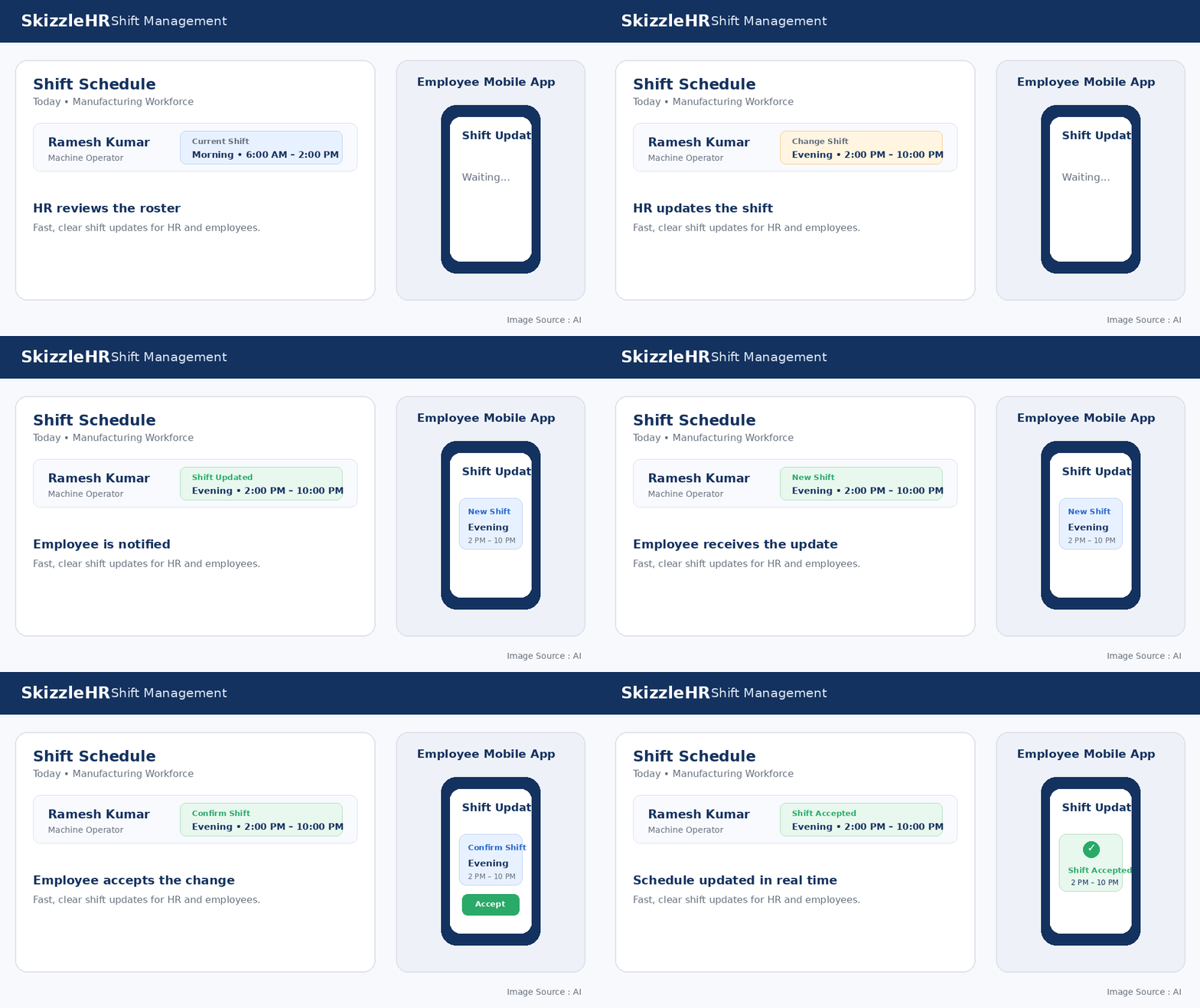
With shift scheduling software, HR and managers can make changes to schedules without relying entirely on manual communication. Depending on the system, employees can be notified about their assigned shifts or schedule changes, while managers can get better visibility into workforce availability. This is particularly useful for organizations managing rotating shifts. For example: Morning → Evening → Night → Weekly Off When these rotations are handled manually, mistakes can creep in easily. An employee may be assigned incorrectly, a weekly off may be missed, or a supervisor may continue working with an outdated roster. A centralized system gives everyone access to the latest schedule. That small change can save a surprising amount of time, and a lot of unnecessary phone calls.
4. It Connects Shift PlanningwithAttendance
Creating a shift roster is only half the job. The bigger question is: Did employees actually follow the schedule? This is where workforce management software becomes especially useful for manufacturing companies. When shift management and attendance are disconnected, HR teams may need to compare rosters against attendance records manually. For instance:
| Planned Shift | Actual Attendance | What HR May Need to Check |
|---|---|---|
| 6 AM – 2 PM | 6:18 AM | Late arrival |
| 2 PM – 10 PM | 2:02 PM | On time |
| 10 PM – 6 AM | No attendance | Absence |
| 6 AM – 2 PM | 6 AM – 4 PM | Overtime |
When HRMS connects Manufacturing Shift Management with Time & Attendance, these discrepancies become easier to identify. HR can get a clearer view of scheduled hours, attendance, late arrivals, absences, and overtime. This is particularly valuable when payroll depends on attendance and working hours. Instead of HR spending hours reconciling multiple files at the end of the month, connected data can make the process considerably smoother. In other words, shift planning shouldn’t exist in isolation. The real value comes when the roster connects with what actually happens on the factory floor.
5. It Opens the Door to Smarter and AI-Assisted Scheduling
Traditional scheduling is largely based on rules and human judgment. But modern HR technology is moving toward something more intelligent. AI shift scheduling can potentially help organizations analyze multiple workforce variables and recommend schedules based on predefined business rules and workforce requirements. Think about the number of factors a manufacturing supervisor may need to consider:
- Who is available?
- Who is on leave?
- Which employees have the required skills?
- Which shifts need more people?
- Who has already worked overtime?
- Who is assigned to a particular department?
- Are there scheduling conflicts?
- Are employees being rotated appropriately?
An AI-assisted approach can help HR teams process these variables faster. This doesn’t mean handing the entire decision-making process to AI. In manufacturing, human judgment still matters. A production manager may know that a particular employee is best suited for a machine or that a team works better together. The smarter approach is human + technology, where the system handles repetitive scheduling work while HR and managers remain in control of important decisions. For companies moving toward AI-powered HRMS for Manufacturing, this is one of the more interesting areas to watch.
Why Manufacturing Companies Need More Than a Basic Employee Scheduler?
A standalone employee scheduling software for factories can help create rosters. But manufacturing companies often need more than that. Their workforce management ecosystem may include: Employees → Shifts → Attendance → Leave → Overtime → Payroll When these processes operate independently, HR ends up spending time moving information from one system to another. An HRMS can connect these processes. For example, an employee’s shift can determine the expected working hours. Attendance can then be compared against the assigned shift. Overtime can be tracked based on actual working hours, and relevant information can flow into payroll. This creates a connected approach to factory workforce management instead of treating shift scheduling as a standalone HR activity.
What Should You Look for in Shift Management Software?
If you’re evaluating Shift Management Software for your organization, don’t just ask whether it can create a roster. Look at the bigger picture. A useful solution should ideally offer:
- Flexible shift creation and configuration
- Employee roster management
- Multiple shift patterns
- Shift rotation support
- Integration with attendance
- Leave and holiday visibility
- Overtime tracking
- Employee self-service
- Manager-level controls
- Real-time schedule visibility
- Mobile accessibility
- Reporting and analytics
- Integration with payroll
- Support for multiple departments or locations
The right features will depend on your workforce size and operational model. A factory running two fixed shifts will have different requirements from a manufacturing organization operating multiple rotating shifts across several locations.
How SkizzleHR Helps Simplify Shift Management?
This is where SkizzleHR is designed to bring the different pieces together. SkizzleHR’s Shift Management helps organizations create and manage employee shifts while connecting shift planning with broader HR processes such as Time & Attendance, Leave, Employee Self-Service, and Payroll. Instead of managing shift rosters separately from attendance and employee data, HR teams can manage these processes through a unified HRMS. For manufacturing organizations, this can mean easier employee roster management, better visibility into attendance, and less dependence on manual spreadsheets and communication. The platform also supports workforce requirements such as shift management, attendance tracking, geo-fencing, GPS-based tracking, and mobile-based attendance features—useful capabilities for organizations with employees working across factory floors, multiple locations, or different shifts. The bigger advantage is the connected workflow. Plan the shift. Track attendance. Manage changes. Review working hours. Process payroll. When these activities work together, HR spends less time chasing information and more time managing the workforce.
Final Thoughts
Shift planning may look like a simple administrative task from the outside. Inside a manufacturing company, it is anything but simple. One incorrect shift assignment can affect attendance. An attendance mismatch can affect overtime. Overtime can affect payroll. And a poorly planned roster can eventually affect productivity and employee experience. That is why manufacturing companies are increasingly looking beyond basic spreadsheets toward Shift Planning Software that is integrated with HRMS platforms. The goal isn’t simply to create a roster faster. It is to create a more connected, flexible, and reliable workforce management process. And when technology takes care of the repetitive work, HR and operations teams can focus on what technology can’t replace: making the right decisions for their people and their production floor. Looking to simplify shift planning and workforce management? Explore SkizzleHR’s Shift Management capabilities and see how an integrated HRMS can make managing your manufacturing workforce easier.
You might also like


Start Growing with SkizzleHR
Our team is ready to guide you through an interactive demonstration, tailored to your business needs.
Request a demo