How to Automate Employee Attendance Tracking for Remote and Hybrid Teams?
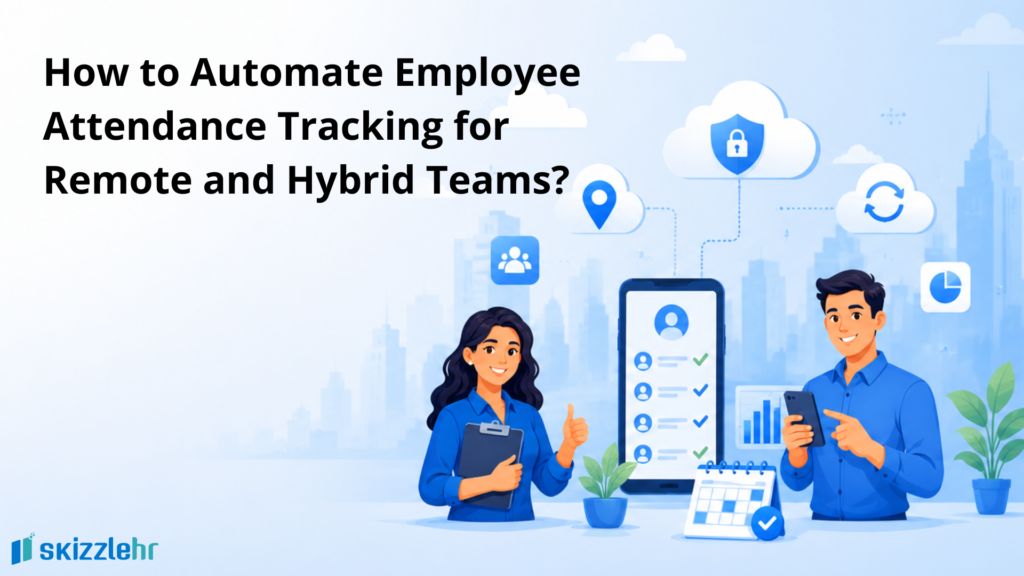
Remote and hybrid work models have become a permanent part of modern business operations. While they offer flexibility and improved employee satisfaction, they also create new challenges for HR teams, especially when it comes to monitoring employee attendance accurately.
Traditional attendance methods such as manual registers, spreadsheets, and punch cards are no longer effective for distributed teams. Businesses today require smarter, more reliable ways to track working hours, shifts, breaks, and employee locations without disrupting productivity.
This is where understanding how to automate employee attendance tracking becomes essential. By leveraging modern HR technology and an automated attendance management system, organizations can eliminate manual errors, improve compliance, and gain real-time workforce visibility.
In this guide, we’ll explore the importance of attendance automation, its benefits, and how businesses can successfully implement it for remote and hybrid teams.
How to Automate Employee Attendance Tracking Among Remote and Hybrid Workforces?
Attendance tracking is no longer just about recording employee check-ins and check-outs. It plays a critical role in:
- Payroll accuracy
- Workforce planning
- Productivity monitoring
- Compliance management
- Overtime calculations
- Employee accountability
In remote and hybrid environments, managers often struggle with questions such as:
- Are employees working their assigned hours?
- Is attendance data accurate?
- How can field employees be tracked effectively?
- Are shift schedules being followed?
- How can payroll be calculated without discrepancies?
Without a structured attendance process, businesses may face payroll disputes, compliance risks, and reduced operational visibility.
What Is an Automated Attendance Management System?
An automated attendance management system is a software solution that records, monitors, and manages employee attendance without requiring manual intervention.
Instead of relying on spreadsheets or paper records, employees can mark attendance through:
- Mobile applications
- GPS-enabled check-ins
- Web portals
- Biometric integrations
- Geofencing technology
- QR code scanning
- Self-service employee portals
The system automatically captures attendance data and synchronizes it with HR and payroll processes.
This eliminates repetitive administrative work while ensuring accurate records across the organisation.
How to Automate Employee Attendance Tracking Successfully?
Implementing attendance automation requires a strategic approach. Here are the key steps businesses should follow.
1. Identify Your Workforce Structure
Before selecting an attendance solution, evaluate your workforce model.
Different businesses may have:
- Fully remote employees
- Hybrid employees
- Field sales teams
- Site-based workers
- Shift-based operations
- Multi-location teams
Each workforce type has unique attendance requirements.
For example, field employees may need GPS tracking, while office-based hybrid employees may require geofenced attendance.
Understanding these requirements helps in selecting the right attendance automation tools.
2. Choose a Cloud-Based Attendance Solution
Cloud-based attendance software provides flexibility and accessibility for remote and hybrid teams.
Unlike traditional systems that require physical infrastructure, cloud platforms allow employees to:
- Check in from approved locations
- Access schedules remotely
- View attendance history
- Apply for regularizations
- Monitor leave balances
Managers can access attendance reports from anywhere, enabling real-time workforce monitoring.
Cloud technology also ensures that attendance data remains secure and automatically backed up.
3. Enable Mobile Attendance Tracking
Modern employees work from multiple locations, making mobile attendance an essential feature.
A mobile-based attendance system allows employees to:
- Mark attendance using smartphones
- Submit location-based check-ins
- Track work hours
- View attendance summaries
- Request corrections when needed
This eliminates dependency on office infrastructure and provides greater flexibility for hybrid teams.
Mobile attendance solutions also improve employee adoption rates due to their ease of use.
4. Use GPS-Based Attendance Verification
One of the biggest concerns in remote attendance management is ensuring authenticity.
GPS-enabled attendance systems verify employee location during check-in and check-out.
Benefits include:
- Accurate location verification
- Reduced time theft
- Improved field workforce visibility
- Better route monitoring
- Transparent attendance records
This is particularly useful for sales teams, service technicians, delivery personnel, and field executives.
Managers gain confidence that employees are present at assigned locations without needing constant supervision.
5. Implement Geofencing for Location-Based Attendance
Geofencing creates virtual boundaries around approved work locations.
When employees enter or exit designated areas, attendance actions can be automatically recorded or validated.
This helps businesses:
- Prevent attendance fraud
- Verify site visits
- Manage multiple office locations
- Simplify hybrid work tracking
For businesses with regional offices, construction sites, warehouses, or client locations, geofencing offers an additional layer of attendance accuracy.
6. Automate Shift Scheduling and Attendance
Shift management can become increasingly complex when employees work remotely or follow rotating schedules.
Attendance automation software can:
- Assign shifts automatically
- Track shift adherence
- Calculate late arrivals
- Record overtime hours
- Manage rotational shifts
- Handle flexible work schedules
Automated shift management reduces administrative workload while ensuring fair workforce scheduling.
Employees also receive greater visibility into their schedules and working hours.
7. Integrate Attendance with Payroll
Attendance and payroll are closely connected.
Manual attendance processes often lead to payroll inaccuracies, including:
- Incorrect salary calculations
- Missed overtime payments
- Leave deduction errors
- Compliance issues
Integrating attendance with payroll allows businesses to automatically calculate:
- Working days
- Paid days
- Overtime
- Absences
- Leave balances
This significantly reduces payroll processing time while improving accuracy.
Benefits of Automating Employee Attendance Tracking
Organisations that implement attendance automation experience several operational advantages.
1. Increased Accuracy
Manual attendance records are prone to errors. Automation ensures that attendance data is captured consistently and accurately, minimizing discrepancies.
2. Time Savings for HR Teams
HR professionals often spend hours reconciling attendance records. Automated systems eliminate repetitive administrative tasks, allowing HR teams to focus on strategic initiatives.
3. Improved Compliance
Labour laws and attendance regulations require businesses to maintain accurate records. Automated systems generate detailed audit trails that support compliance requirements and reporting obligations.
4. Better Employee Accountability
Transparent attendance systems create clear expectations regarding working hours and attendance policies. Employees gain visibility into their attendance records, reducing disputes and misunderstandings.
5. Real-Time Workforce Visibility
Managers can instantly access attendance dashboards showing:
- Present employees
- Absent employees
- Late arrivals
- Shift status
- Field workforce locations
This enables quicker decision-making and workforce planning.
6. Enhanced Employee Experience
Modern attendance solutions provide self-service access to attendance information.
Employees can:
- Check attendance history
- Monitor working hours
- Submit corrections
- View schedules
This improves transparency and reduces dependency on HR teams.
Common Challenges Businesses Face Without Attendance Automation
Organizations that continue using manual attendance systems often encounter:
1. Data Inconsistencies
Different teams may maintain attendance records using separate methods, creating reporting challenges.
2. Payroll Errors
Manual attendance calculations increase the likelihood of payroll mistakes.
3. Attendance Fraud
Buddy punching, inaccurate reporting, and unauthorized check-ins can occur when verification mechanisms are absent.
4. Limited Workforce Visibility
Managers may struggle to monitor employee attendance across locations.
5. Administrative Burden
HR teams spend excessive time maintaining records instead of focusing on employee engagement and workforce development.
Attendance automation directly addresses these challenges through centralized and real-time workforce tracking.
Best Practices for Attendance Automation
To maximise the benefits of an automated attendance management system:
- Clearly define attendance policies.
- Communicate expectations to employees.
- Use GPS and geofencing where appropriate.
- Regularly review attendance reports.
- Integrate attendance with payroll and leave management.
- Train employees on system usage.
- Monitor compliance and reporting requirements.
A well-implemented attendance strategy improves both operational efficiency and employee trust.
Why Businesses Are Adopting Automated Attendance Management Systems
As remote and hybrid work models continue to evolve, organizations require tools that provide flexibility without compromising accountability.
Businesses are increasingly investing in attendance automation because it helps them:
- Scale workforce operations
- Improve payroll accuracy
- Monitor distributed teams
- Strengthen compliance
- Enhance employee experience
The shift toward automation is no longer optional; it has become a critical component of modern workforce management.
Simplify Attendance Management with SkizzleHR
If you’re looking for a smarter way to automate attendance tracking, SkizzleHR offers an advanced attendance and workforce management solution designed for modern businesses.
With SkizzleHR, organizations can streamline attendance management through:
- GPS-enabled attendance tracking for field and remote employees
- Mobile-based check-in and check-out functionality
- Smart shift management and rotational scheduling
- Real-time attendance dashboards
- Automated attendance calculations
- Seamless payroll integration
- Multi-location workforce tracking
- Employee self-service access
Whether you manage remote teams, hybrid workforces, field staff, or multiple business locations, SkizzleHR helps eliminate manual attendance challenges while improving visibility, accuracy, and operational efficiency.
By combining attendance management, shift scheduling, GPS tracking, and payroll integration in a single platform, SkizzleHR empowers HR teams to build a more productive and accountable workforce.
Conclusion
Understanding how to automate employee attendance tracking is essential for organizations embracing remote and hybrid work models. Manual attendance processes often create inefficiencies, inaccuracies, and compliance risks that can impact business performance.
An automated attendance management system provides a scalable solution by simplifying attendance recording, improving payroll accuracy, enhancing workforce visibility, and supporting compliance requirements.
As businesses continue to modernize their HR operations, attendance automation will remain a foundational tool for managing distributed teams efficiently. With solutions like SkizzleHR, organizations can transform attendance management into a seamless, accurate, and employee-friendly process.
Schedule a FREE demo!
You might also like



Start Growing with SkizzleHR
Our team is ready to guide you through an interactive demonstration, tailored to your business needs.
Request a demo