Payroll Statutory Compliance in India: A Complete Guide
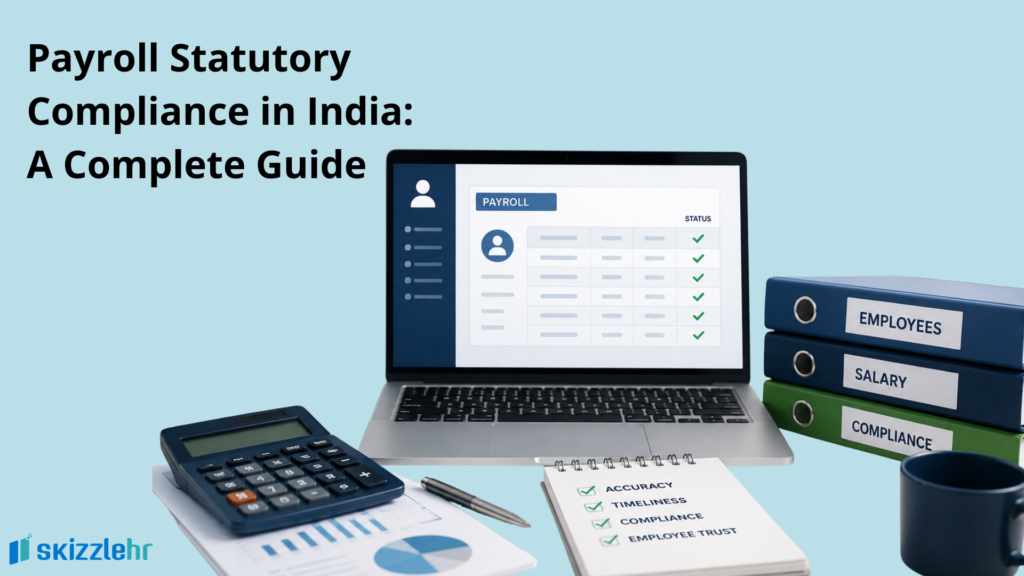
Managing payroll is one of the most critical responsibilities for any business. Beyond calculating salaries and generating payslips, organizations in India must also ensure compliance with multiple labor laws, tax regulations, and government-mandated contributions. This is where payroll statutory compliance becomes essential.
Failure to comply with payroll regulations can lead to penalties, legal complications, employee dissatisfaction, and reputational damage. Whether you are a startup, SME, or enterprise, understanding statutory compliance in payroll is crucial for smooth business operations.
In this complete guide, we will explore everything businesses need to know about payroll statutory compliance in India, including major regulations, challenges, and how modern payroll software can simplify compliance management.
What is Payroll Statutory Compliance?
Payroll statutory compliance refers to the legal framework and mandatory regulations that organizations must follow while processing employee salaries and benefits. These compliances are established by the Indian government to protect employee rights and ensure proper employer contributions toward taxes, social security, and welfare schemes.
Payroll compliance involves:
- Deducting statutory contributions from employee salaries
- Making employer contributions
- Filing returns within deadlines
- Maintaining payroll records
- Generating compliance reports
- Adhering to labor laws and taxation rules
Every organization employing workers in India must comply with applicable payroll regulations depending on employee count, salary structure, and industry type.
Importance of Statutory Compliance in Payroll
Ignoring Statutory Compliance in Payroll can create serious operational and legal issues for businesses. Compliance is not only about avoiding penalties but also about building employee trust and ensuring transparent payroll management.
Here’s why payroll compliance is important:
- Avoids Legal Penalties: Non-compliance with labor laws can result in fines, notices, audits, and legal action from government authorities.
- Ensures Employee Satisfaction: Employees expect accurate salary processing, timely statutory deductions, and transparent benefits management.
- Maintains Company Reputation: Organizations with strong compliance practices are viewed as reliable and professional by employees, clients, and stakeholders.
- Reduces Payroll Errors: Automated compliance systems reduce manual calculation errors and improve payroll accuracy.
- Supports Business Scalability: As businesses grow, maintaining compliance becomes more complex. A structured compliance process ensures smooth expansion.
Major Payroll Statutory Compliances in India
India has several payroll-related laws and regulations that employers must follow. Below are the key compliances businesses should understand.
1. Employees’ Provident Fund (EPF)
The Employees’ Provident Fund is regulated under the EPF Act, 1952. It is a retirement savings scheme applicable to organizations with 20 or more employees.
Under EPF:
- Both employer and employee contribute 12% of basic salary plus DA
- Employers must deposit contributions monthly
- UAN (Universal Account Number) management is mandatory
- Monthly and annual returns must be filed
EPF ensures long-term financial security for employees after retirement.
2. Employee State Insurance (ESI)
ESI provides medical and social security benefits to eligible employees. It applies to businesses meeting specified employee thresholds.
Under ESI:
- Employees contribute a percentage of wages
- Employers contribute their share
- Employees receive healthcare and insurance benefits
- Timely filing and payment are mandatory
This scheme supports employees during illness, maternity, or workplace injuries.
3. Professional Tax (PT)
Professional Tax is a state-level tax imposed on salaried employees in certain Indian states. Key points include:
- Deduction amounts vary by state
- Employers are responsible for deduction and submission
- Monthly or periodic returns must be filed
Since PT regulations differ across states, businesses operating in multiple locations must manage compliance carefully.
4. Tax Deducted at Source (TDS)
TDS on salaries is governed by the Income Tax Act. Employers must:
- Calculate employee income tax liability
- Deduct TDS monthly
- Deposit taxes within due dates
- Issue Form 16 annually
- File quarterly TDS returns
Accurate TDS calculations are essential to avoid tax discrepancies and notices.
5. Gratuity Compliance
Gratuity is governed by the Payment of Gratuity Act, 1972.
Employees become eligible after completing five years of continuous service. Employers must calculate and disburse gratuity as per government regulations.
6. Bonus Compliance
Under the Payment of Bonus Act, eligible employees must receive bonuses based on salary and organizational profitability. Businesses must:
- Calculate bonuses accurately
- Maintain bonus registers
- Ensure timely payouts
Shops and Establishments Compliance
Every state in India has Shops and Establishments regulations governing:
- Working hours
- Leave policies
- Employee rights
- Record maintenance
Employers must comply with state-specific rules applicable to their business.
Labour Welfare Fund (LWF)
Certain states require contributions toward Labour Welfare Fund schemes for employee welfare activities. Employers must:
- Deduct employee contributions
- Make employer contributions
- Submit returns periodically
Common Challenges in Payroll Statutory Compliance
Managing payroll compliance manually can be difficult, especially for growing businesses.
- Frequent Regulatory Changes: Indian labor and tax laws are updated regularly. Businesses must stay informed about changing rules and contribution rates.
- Complex Calculations: Managing multiple deductions, exemptions, and salary structures increases the risk of errors.
- Multi-State Compliance: Organizations operating in different states must handle varying PT, LWF, and labor law regulations.
- Deadline Management: Missing filing or payment deadlines can result in penalties and notices.
- Manual Data Handling: Spreadsheet-based payroll systems are time-consuming and prone to inaccuracies.
- Compliance Documentation: Maintaining audit-ready payroll records and reports requires organized data management.
How Payroll Software Simplifies Compliance Management ?
Modern payroll software has transformed how businesses manage statutory compliance. Automated systems help organizations streamline calculations, filing, and reporting while reducing manual effort.
Here’s how payroll software improves compliance management:
1. Automated Compliance Calculations
Payroll systems automatically calculate:
- PF contributions
- ESI deductions
- TDS liabilities
- Professional Tax
- Bonus and gratuity
This minimizes human errors and ensures accurate salary processing.
2. Automatic Updates for Regulatory Changes
Modern payroll software regularly updates compliance rules according to the latest government regulations.
This helps businesses stay compliant without manually tracking every policy change.
3. Centralized Employee Data Management
Payroll platforms maintain all employee records in one secure system, making compliance reporting easier and faster.
4. Timely Filing and Alerts
Payroll software provides reminders for:
- Return filing deadlines
- Contribution submissions
- Tax deposit due dates
This reduces the risk of missed deadlines and penalties.
5. Easy Report Generation
Businesses can generate:
- PF reports
- ESI returns
- TDS statements
- Salary registers
- Compliance reports
These reports simplify audits and internal recordkeeping.
6. Improved Accuracy and Transparency
Employees gain access to accurate payslips, tax details, and contribution records, improving trust and transparency.
Future of Payroll Compliance in India
The future of payroll compliance in India is rapidly evolving with digitization and automation. Several trends are shaping the future:
- Increased Automation: Businesses are moving toward AI-driven payroll systems that reduce manual intervention and improve efficiency.
- Cloud-Based Payroll Platforms: Cloud payroll systems enable remote accessibility, centralized compliance management, and real-time updates.
- Integration with HRMS: Payroll compliance tools are increasingly integrated with attendance, leave, and employee management systems.
- Digital Government Initiatives: Government portals and digital filing systems are encouraging organizations to adopt automated payroll solutions.
- Focus on Employee Experience: Modern payroll platforms are improving employee self-service capabilities for tax documents, payslips, and compliance records.
Businesses that invest in advanced payroll software today will be better prepared for future regulatory and operational requirements.
Why Businesses Need Compliance-Focused Payroll Software?
Managing payroll manually is no longer practical for growing organizations. Businesses require payroll systems that not only process salaries but also ensure full statutory compliance. A compliance-focused payroll solution helps organizations:
- Reduce legal risks
- Improve payroll efficiency
- Ensure accurate salary processing
- Maintain audit-ready documentation
- Enhance employee trust
- Save time and operational costs
Choosing the right payroll software is essential for long-term HR and business success.
Simplify Payroll Statutory Compliance with SkizzleHR
SkizzleHR offers a comprehensive payroll and HR software solution designed specifically for Indian businesses. With built-in compliance tools, automated payroll processing, and cloud-based accessibility, SkizzleHR helps organizations manage complex payroll operations with ease.
SkizzleHR simplifies:
- PF, ESI, PT, and TDS calculations
- Payroll automation
- Compliance reporting
- Salary processing
- Payslip generation
- Employee data management
- Attendance and leave integration
Its India-focused payroll compliance features help businesses stay updated with changing regulations while reducing manual effort and payroll errors.
Whether you are a startup, SME, or enterprise, SkizzleHR provides a reliable and scalable payroll solution that streamlines statutory compliance and improves overall HR efficiency.
As payroll regulations continue to evolve, businesses need smart, automated, and future-ready solutions, and SkizzleHR delivers exactly that.
Schedule a FREE demo!
You might also like

Start Growing with SkizzleHR
Our team is ready to guide you through an interactive demonstration, tailored to your business needs.
Request a demo