How Document Management Systems Improve Enterprise Efficiency?
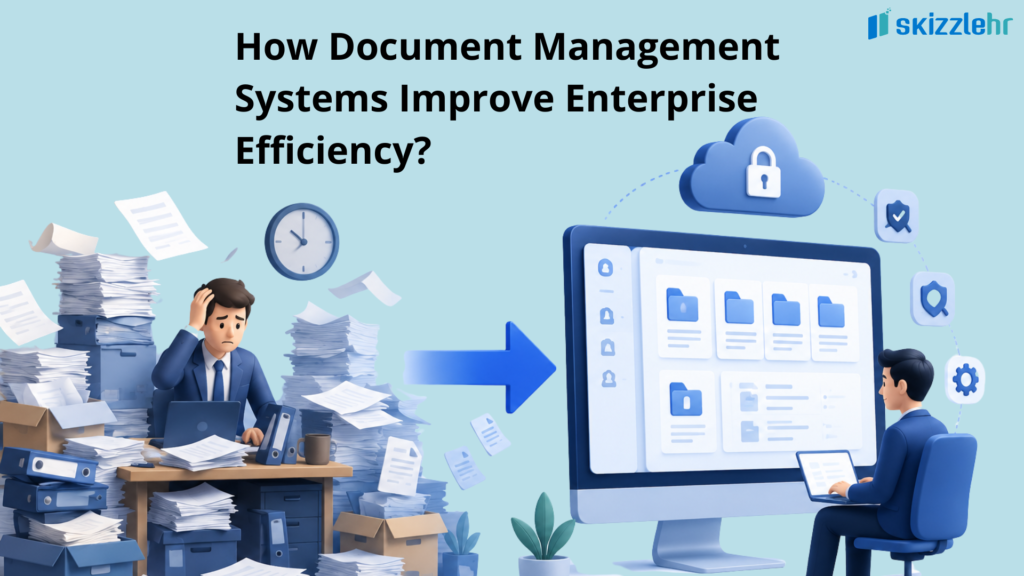
In today’s digital-first business environment, organizations deal with an overwhelming amount of information every day. From employee records and invoices to contracts, compliance documents, and operational files, enterprises generate and manage thousands of documents across departments. Relying on paper files, scattered folders, or outdated storage methods can quickly slow down operations and reduce productivity.
This is where a modern document management system becomes essential. Businesses today need centralized, secure, and efficient ways to organize, access, and manage documents without delays or confusion. A powerful document management system software not only stores files but also transforms how organizations collaborate, maintain compliance, and improve overall operational efficiency.
Every organization generates and manages thousands of documents throughout the employee lifecycle, including offer letters, employment contracts, identity proofs, payroll records, appraisal documents, compliance reports, and policy acknowledgements. As businesses grow, managing these documents manually becomes increasingly challenging, leading to misplaced files, slower approvals, duplication of records, and higher administrative costs. A Document Management System helps enterprises centralize, organize, and secure business documents while significantly improving operational efficiency.
Modern HRMS Software integrates document management with employee records, payroll, attendance, leave management, recruitment, and compliance processes, allowing organizations to access critical information from a single platform. Instead of spending valuable time searching through paper files or multiple storage systems, HR teams can instantly retrieve employee documents, automate approvals, and maintain secure digital records. This improves productivity, strengthens compliance, and supports faster business operations across departments.
As enterprises continue to embrace digital transformation, document management systems are becoming critical tools for streamlining workflows and improving business performance.
What is a Document Management System?
A document management system (DMS) is a digital solution designed to store, organize, track, and manage electronic documents in a centralized platform. Instead of managing paper-based files or disconnected folders across multiple devices, organizations can securely access all important documents from one place.
Modern document management system software helps businesses automate document-related processes while ensuring data security, version control, and easy retrieval of information. These systems are widely used across HR, finance, legal, healthcare, education, manufacturing, and other industries that handle large volumes of sensitive documents.
Why Traditional Document Handling Slows Down Enterprises?
Many businesses still struggle with manual document handling methods such as physical storage cabinets, spreadsheets, or fragmented cloud folders. These outdated practices create several operational challenges, including:
- Time wasted searching for files
- Duplicate or misplaced documents
- Limited collaboration across teams
- Increased risk of data loss
- Security vulnerabilities
- Compliance difficulties
- Delayed approvals and workflows
When employees spend excessive time locating or verifying documents, overall productivity suffers. Manual processes also increase the possibility of human error, which can lead to operational inefficiencies and compliance risks.
Document management system software solves these challenges by creating a structured and automated approach to document handling.
1. Centralized Document Storage Improves Accessibility
One of the biggest advantages of a document management system is centralized storage. Instead of storing files across emails, desktops, physical folders, or multiple software platforms, all documents are maintained within a single system.
Centralized access allows employees to quickly locate files using keywords, categories, tags, or advanced search filters. This significantly reduces the time spent searching for documents and improves workflow efficiency.
For enterprises with multiple branches or remote teams, centralized storage ensures employees can securely access documents anytime and from anywhere. This improves collaboration and enables faster decision-making across departments.
2. Faster Document Retrieval Saves Valuable Time
In large organizations, employees often spend hours every week searching for contracts, reports, invoices, employee records, or compliance files. Delayed document retrieval affects customer service, internal approvals, and operational speed.
Document management system software eliminates this issue by enabling instant document searches. Smart indexing, metadata tagging, and AI-powered search features make it easier to locate information within seconds.
Quick access to documents improves productivity while allowing employees to focus on high-value tasks instead of administrative work.
3. Enhanced Collaboration Across Teams
Modern enterprises rely heavily on collaboration between departments, remote employees, managers, and external stakeholders. Traditional file-sharing methods often create version conflicts, communication gaps, and delays.
A document management system simplifies collaboration by allowing multiple users to access, review, edit, and share documents in real time. Features like version control ensure that employees always work on the latest document version, reducing duplication and confusion.
Collaboration tools also improve approval workflows, enabling managers to review and approve documents faster without relying on lengthy email chains.
4. Improved Data Security and Access Control
Data security is one of the most important concerns for modern businesses. Enterprises handle sensitive information such as employee data, financial records, legal contracts, and confidential business documents. Storing such information in unsecured systems can expose organizations to data breaches and compliance risks.
A reliable document management system software includes advanced security features such as:
- Role-based access permissions
- Data encryption
- Secure cloud storage
- Audit trails
- Password protection
- Multi-factor authentication
These features help businesses protect confidential information while ensuring only authorized users can access sensitive documents.
Audit logs also provide complete visibility into document activity, helping organizations track who viewed, edited, or shared specific files.
5. Streamlined Workflow Automation
Manual document workflows often create bottlenecks within organizations. Processes such as approvals, document reviews, onboarding, reimbursements, and policy acknowledgments can become slow and inefficient when handled manually.
Document management systems improve enterprise efficiency by automating repetitive workflows. Automated notifications, approval routing, reminders, and document tracking reduce delays and eliminate dependency on paper-based approvals.
Workflow automation helps organizations maintain consistency while improving turnaround times across departments.
For example, HR teams can automate employee document collection during onboarding, while finance departments can streamline invoice approvals and reimbursements.
6. Better Compliance and Regulatory Management
Enterprises must comply with various industry regulations and legal requirements related to document retention, employee data, taxation, and financial reporting. Managing compliance manually can be risky and time-consuming.
A document management system software helps organizations maintain compliance by securely storing records, tracking document history, and enforcing retention policies.
Automated recordkeeping ensures businesses can quickly retrieve required documents during audits, inspections, or legal reviews. This reduces compliance-related stress and minimizes the risk of penalties due to missing or inaccurate records.
7. Reduced Paperwork and Operational Costs
Paper-based document handling not only slows down operations but also increases administrative expenses. Printing, photocopying, physical storage, and document transportation add unnecessary operational costs over time.
By digitizing records and automating document processes, enterprises can significantly reduce paper usage and storage requirements. This leads to lower operational expenses while supporting environmentally sustainable business practices.
Digital document management also minimizes the risks associated with physical document damage, theft, or loss.
8. Scalability for Growing Enterprises
As organizations grow, document volumes increase rapidly. Managing expanding data manually becomes difficult and inefficient. A scalable document management system allows enterprises to handle growing document requirements without operational disruption.
Cloud-based document management system software offers flexible storage, centralized access, and easy scalability for businesses of all sizes. Whether a company manages hundreds or thousands of documents daily, the system can adapt to evolving business needs.
Scalable solutions also support hybrid and remote work environments, which have become increasingly common in modern workplaces.
9. Real-Time Insights and Reporting
Modern document management systems often include reporting and analytics features that provide valuable operational insights. Businesses can monitor document activity, approval timelines, workflow performance, and user engagement in real time.
These insights help enterprises identify process inefficiencies, improve workflow management, and optimize productivity across departments.
Analytics also support better decision-making by providing visibility into how documents move within the organization.
Why Digital Document Management Is Essential for Enterprises
As enterprises expand across multiple locations and departments, document management becomes increasingly complex. HR teams, finance departments, compliance officers, and business managers all require secure access to important employee and organizational records. Without a centralized document management system, organizations often experience delays, version control issues, data duplication, and increased compliance risks.
A digital document management solution simplifies these challenges by providing cloud-based storage, document categorization, advanced search capabilities, role-based access, and automated workflows. Organizations can securely manage employee records, contracts, payroll documents, compliance certificates, and policy acknowledgements while maintaining complete visibility into document activity. This structured approach improves collaboration between departments and ensures important business information is always available when required.
How Document Management Systems Support HR Operations?
Human Resources departments manage a large number of employee-related documents, including:
- Offer letters
- Employee contracts
- ID proofs
- Payroll documents
- Performance records
- Compliance forms
- Exit documents
Handling these records manually can become overwhelming, especially for growing organizations. Document management system software helps HR teams organize employee data securely while simplifying onboarding, policy management, and employee record maintenance.
With centralized digital storage, HR professionals can access employee documents instantly while ensuring compliance and confidentiality.
Why Businesses are Choosing SkizzleHR Document Management?
As organizations continue to modernize their HR and operational processes, having an integrated document management solution is becoming increasingly important. SkizzleHR offers a smart and efficient document management system designed to simplify enterprise document handling.
SkizzleHR’s document management capabilities help businesses securely store, organize, and access employee and operational documents from a centralized platform. With features such as secure cloud storage, role-based access, digital document organization, and streamlined employee record management, organizations can reduce paperwork and improve administrative efficiency.
SkizzleHR also helps HR teams simplify onboarding, maintain compliance, manage employee files, and reduce manual documentation efforts. By integrating document management with other HR operations such as payroll, attendance, and employee management, SkizzleHR creates a seamless digital workplace experience.
For modern enterprises looking to improve efficiency, reduce administrative burden, and support digital transformation, SkizzleHR provides a practical and scalable solution.
Supporting Business Productivity Through Intelligent Document Management
A modern document management system does more than store files—it improves the overall efficiency of enterprise operations. Automated document approvals, digital signatures, secure sharing, audit trails, and workflow integration help organizations eliminate repetitive manual tasks while accelerating business processes. Employees can quickly upload, retrieve, and share documents without relying on physical paperwork, reducing delays and improving collaboration.
When integrated with HR Management System functions such as payroll, attendance, recruitment, leave management, and employee self-service, document management becomes an integral part of digital HR transformation. Businesses benefit from improved compliance, stronger data security, reduced storage costs, and simplified audit preparation. As organizations continue embracing paperless operations, intelligent document management helps build a more efficient, secure, and scalable workplace.
Conclusion
In a fast-paced business environment, efficient document handling plays a critical role in organizational success. A modern document management system helps enterprises streamline workflows, improve collaboration, enhance security, and reduce operational delays.
As businesses continue to adopt digital solutions, investing in reliable document management system software is no longer optional, it has become a strategic necessity. From improving compliance to enabling faster decision-making, document management systems empower organizations to operate more efficiently and stay competitive in today’s evolving workplace.
An effective document management system is essential for improving enterprise efficiency, reducing administrative workload, and maintaining secure access to critical business information. Organizations that digitize document management benefit from faster workflows, better collaboration, enhanced compliance, and improved employee experiences. Centralized document management also enables businesses to respond more quickly to operational and regulatory requirements while supporting long-term digital transformation.
By choosing the right solution, businesses can transform document handling from a time-consuming administrative task into a streamlined and productivity-driven process.
Schedule a FREE demo!
You might also like



Start Growing with SkizzleHR
Our team is ready to guide you through an interactive demonstration, tailored to your business needs.
Request a demo